Preferential entailment is a non-monotonic logic based on selecting only models that are considered the most plausible. The plausibility of models is expressed by an ordering among models called a preference relation, hence the name preference entailment. Formally, given a propositional formula F {\displaystyle F} and an ordering over propositional models ≤ {\displaystyle \leq } , preferential entailment selects only the models of F {\displaystyle F} that are minimal according to ≤ {\displaystyle \leq } . This selection leads to a non-monotonic inference relation: F ⊨ pref G {\displaystyle F\models _{\text{pref}}G} holds if and only if all minimal models of F {\displaystyle F} according to ≤ {\displaystyle \leq } are also models of G {\displaystyle G} . Circumscription can be seen as the particular case of preferential entailment when the ordering is based on containment of the sets of variables assigned to true (in the propositional case) or containment of the extensions of predicates (in the first-order logic case).
Caffe (software)
Caffe (Convolutional Architecture for Fast Feature Embedding) is a deep learning framework, originally developed at University of California, Berkeley. It is open source, under a BSD license. It is written in C++, with a Python interface. == History == Yangqing Jia created the Caffe project during his PhD at UC Berkeley, while working the lab of Trevor Darrell. The first version, called "DeCAF", made its first appearance in Spring 2013 when it was used for the ILSVRC challenge (later called ImageNet). The library was named Caffe and released to the public in December 2013. It reached end-of-support in 2018. It is hosted on GitHub. == Features == Caffe supports many different types of deep learning architectures geared towards image classification and image segmentation. It supports CNN, RCNN, LSTM and fully-connected neural network designs. Caffe supports GPU- and CPU-based acceleration computational kernel libraries such as Nvidia cuDNN and Intel MKL. == Applications == Caffe is being used in academic research projects, startup prototypes, and even large-scale industrial applications in vision, speech, and multimedia. Yahoo! has also integrated Caffe with Apache Spark to create CaffeOnSpark, a distributed deep learning framework. == Caffe2 == In April 2017, Facebook announced Caffe2, which included new features such as recurrent neural network (RNN). At the end of March 2018, Caffe2 was merged into PyTorch.
Kernel Assisted Superuser
Kernel Assisted Superuser (short: KernelSU) is an alternative method for obtaining root privileges on Android devices. KernelSU implementations are developed as free and open-source software under the terms of the GPLv3 license. == Technical differences == KernelSU differs from other methods in that root access is implemented directly in the kernel. Compared to other root methods that run in userspace, such as Magisk, this has the advantage that commands with su can be executed like normal commands, but still have root privileges. This is not prevented by SELinux or detected by the PlayIntegrity API check, so applications that use it will continue to function. Unlike Magisk, /system/bin/su is a virtual file implemented by hooking system calls with kprobes, and overlayfs is used for systemless modifications to the system partition instead of magic mount. == History == The planning of KernelSU was started in 2018 by developer Jason Donenfeld, also known as XDA user zx2c4. The lack of a root manager app and the difficulty of creating boot images meant that KernelSU was not suitable for productive use, and for a long time this method remained theoretical and could only be used by developers. In 2021, Google launched Generic Kernel Images (GKI for short), which facilitates the creation of a set of device-independent rooted boot images. In response, the developer known on XDA as weishu, who had also worked on projects such as VirtualXposed, adapted KernelSU for GKI-compatible kernels. The adaptation, which was released in January 2023, ensures that any device booting with Linux kernel version 5.10 or higher should be compatible. In addition, the developer also offers a special manager app that, in addition to managing root privileges, also offers overlay-based modding similar to Magisk modules. As of November 2025, 310 developers have contributed to the development of the KernelSU implementation. == Distribution == KernelSU can be installed on all devices that use GKI, as well as on individually supported devices without GKI. Some custom ROMs already have it integrated by default, including ROMs such as CrDroid, Bliss OS, and Evolution X.
Truth discovery
Truth discovery (also known as truth finding) is the process of choosing the actual true value for a data item when different data sources provide conflicting information on it. Several algorithms have been proposed to tackle this problem, ranging from simple methods like majority voting to more complex ones able to estimate the trustworthiness of data sources. Truth discovery problems can be divided into two sub-classes: single-truth and multi-truth. In the first case only one true value is allowed for a data item (e.g birthday of a person, capital city of a country). While in the second case multiple true values are allowed (e.g. cast of a movie, authors of a book). Typically, truth discovery is the last step of a data integration pipeline, when the schemas of different data sources have been unified and the records referring to the same data item have been detected. == General principles == The abundance of data available on the web makes more and more probable to find that different sources provide (partially or completely) different values for the same data item. This, together with the fact that we are increasing our reliance on data to derive important decisions, motivates the need of developing good truth discovery algorithms. Many currently available methods rely on a voting strategy to define the true value of a data item. Nevertheless, recent studies, have shown that, if we rely only on majority voting, we could get wrong results even in 30% of the data items. The solution to this problem is to assess the trustworthiness of the sources and give more importance to votes coming from trusted sources. Ideally, supervised learning techniques could be exploited to assign a reliability score to sources after hand-crafted labeling of the provided values; unfortunately, this is not feasible since the number of needed labeled examples should be proportional to the number of sources, and in many applications the number of sources can be prohibitive. == Single-truth vs multi-truth discovery == Single-truth and multi-truth discovery are two very different problems. Single-truth discovery is characterized by the following properties: only one true value is allowed for each data item; different values provided for a given data item oppose to each other; values and sources can either be correct or erroneous. While in the multi-truth case the following properties hold: the truth is composed by a set of values; different values could provide a partial truth; claiming one value for a given data item does not imply opposing to all the other values; the number of true values for each data item is not known a priori. Multi-truth discovery has unique features that make the problem more complex and should be taken into consideration when developing truth-discovery solutions. The examples below point out the main differences of the two methods. Knowing that in both examples the truth is provided by source 1, in the single truth case (first table) we can say that sources 2 and 3 oppose to the truth and as a result provide wrong values. On the other hand, in the second case (second table), sources 2 and 3 are neither correct nor erroneous, they instead provide a subset of the true values and at the same time they do not oppose the truth. == Source trustworthiness == The vast majority of truth discovery methods are based on a voting approach: each source votes for a value of a certain data item and, at the end, the value with the highest vote is select as the true one. In the more sophisticated methods, votes do not have the same weight for all the data sources, more importance is indeed given to votes coming from trusted sources. Source trustworthiness usually is not known a priori but estimated with an iterative approach. At each step of the truth discovery algorithm the trustworthiness score of each data source is refined, improving the assessment of the true values that in turn leads to a better estimation of the trustworthiness of the sources. This process usually ends when all the values reach a convergence state. Source trustworthiness can be based on different metrics, such as accuracy of provided values, copying values from other sources and domain coverage. Detecting copying behaviors is very important, in fact, copy allows to spread false values easily making truth discovery very hard, since many sources would vote for the wrong values. Usually systems decrease the weight of votes associated to copied values or even don’t count them at all. == Single-truth methods == Most of the currently available truth discovery methods have been designed to work well only in the single-truth case. Below are reported some of the characteristics of the most relevant typologies of single-truth methods and how different systems model source trustworthiness. === Majority voting === Majority voting is the simplest method, the most popular value is selected as the true one. Majority voting is commonly used as a baseline when assessing the performances of more complex methods. === Web-link based === These methods estimate source trustworthiness exploiting a similar technique to the one used to measure authority of web pages based on web links. The vote assigned to a value is computed as the sum of the trustworthiness of the sources that provide that particular value, while the trustworthiness of a source is computed as the sum of the votes assigned to the values that the source provides. === Information-retrieval based === These methods estimate source trustworthiness using similarity measures typically used in information retrieval. Source trustworthiness is computed as the cosine similarity (or other similarity measures) between the set of values provided by the source and the set of values considered true (either selected in a probabilistic way or obtained from a ground truth). === Bayesian based === These methods use Bayesian inference to define the probability of a value being true conditioned on the values provided by all the sources. P ( v ∣ ψ ( o ) ) = P ( ψ ( o ) ∣ v ) ⋅ P ( v ) P ( ψ ( o ) ) {\displaystyle P(v\mid \psi (o))={\frac {P(\psi (o)\mid v)\cdot P(v)}{P(\psi (o))}}} where v {\displaystyle \textstyle v} is a value provided for a data item o {\displaystyle \textstyle o} and ψ ( o ) {\displaystyle \textstyle \psi (o)} is the set of the observed values provided by all the sources for that specific data item. The trustworthiness of a source is then computed based on the accuracy of the values that provides. Other more complex methods exploit Bayesian inference to detect copying behaviors and use these insights to better assess source trustworthiness. == Multi-truth methods == Due to its complexity, less attention has been devoted to the study of the multi-truth discovery Below are reported two typologies of multi-truth methods and their characteristics. === Bayesian based === These methods use Bayesian inference to define the probability of a group of values being true conditioned on the values provided by all the data sources. In this case, since there could be multiple true values for each data item, and sources can provide multiple values for a single data item, it is not possible to consider values individually. An alternative is to consider mappings and relations between set of provided values and sources providing them. The trustworthiness of a source is then computed based on the accuracy of the values that provides. More sophisticated methods also consider domain coverage and copying behaviors to better estimate source trustworthiness. === Probabilistic Graphical Models based === These methods use probabilistic graphical models to automatically define the set of true values of given data item and also to assess source quality without need of any supervision. == Applications == Many real-world applications can benefit from the use of truth discovery algorithms. Typical domains of application include: healthcare, crowd/social sensing, crowdsourcing aggregation, information extraction and knowledge base construction. Truth discovery algorithms could be also used to revolutionize the way in which web pages are ranked in search engines, going from current methods based on link analysis like PageRank, to procedures that rank web pages based on the accuracy of the information they provide.
Database-as-IPC
In computer programming, Database-as-IPC may be considered an anti-pattern where a disk persisted table in a database is used as the message queue store for routine inter-process communication (IPC) or subscribed data processing. If database performance is of concern, alternatives include sockets, network socket, or message queue. British computer scientist, Junade Ali, defined the Database-as-IPC Anti-Pattern as using a database to "schedule jobs or queue up tasks to be completed", noting that this anti-pattern centres around using a database for temporary messages instead of persistent data. == Controversy == The issue arises if there is a performance issue, and if additional systems (and servers) can be justified. In terms of performance, recent advancements in database systems provide more efficient mechanisms for signaling and messaging, and database systems also support memory (non-persisted) tables. There are databases with built-in notification mechanisms, such as PostgreSQL, SQL Server, and Oracle. These mechanisms and future improvements of database systems can make queuing much more efficient and avoid the need to set up a separate signaling or messaging queue system along with the server and management overhead. While MySQL doesn't have direct support for notifications, some workarounds are possible. However, they would be seen as non-standard and therefore more difficult to maintain.
Macromedia FreeHand
Macromedia FreeHand (formerly Aldus FreeHand) is a discontinued computer application for creating two-dimensional vector graphics oriented primarily to professional illustration, desktop publishing and content creation for the Web. FreeHand was similar in scope, intended market, and functionality to Adobe Illustrator, CorelDRAW and Xara Designer Pro. Because of FreeHand's dedicated page layout and text control features, it also compares to Adobe InDesign and QuarkXPress. Professions using FreeHand include graphic design, illustration, cartography, fashion and textile design, product design, architects, scientific research, and multimedia production. FreeHand was created by Altsys Corporation in 1988 and licensed to Aldus Corporation, which released versions 1 through 4. In 1994, Aldus merged with Adobe Systems and because of the overlapping market with Adobe Illustrator, FreeHand was returned to Altsys by order of the Federal Trade Commission. Altsys was later bought by Macromedia, which released FreeHand versions 5 through 11 (FreeHand MX). In 2005, Adobe Systems acquired Macromedia and its product line which included FreeHand MX, under whose ownership it presently resides. Since 2003, FreeHand development has been discontinued; in the Adobe Systems catalog, FreeHand has been replaced by Adobe Illustrator. FreeHand MX continues to run under Windows 11 and under Mac OS X 10.6 (Snow Leopard) within Rosetta, a PowerPC code emulator, and requires a registration patch supplied by Adobe. FreeHand 10 runs without problems on Mac OS X Snow Leopard with Rosetta enabled, and does not require a registration patch. Later versions of macOS can use a Mac OS X Snow Leopard Server virtual machine to emulate the required PowerPC support. == History == === Altsys and Aldus FreeHand === In 1984, James R. Von Ehr founded Altsys Corporation to develop graphics applications for personal computers. Based in Plano, Texas, the company initially produced font editing and conversion software; Fontastic Plus, Metamorphosis, and the Art Importer. Their premier PostScript font-design package, Fontographer, was released in 1986 and was the first such program on the market. With the PostScript background having been established by Fontographer, Altsys also developed FreeHand (originally called Masterpiece) as a Macintosh Postscript-based illustration program that used Bézier curves for drawing and was similar to Adobe Illustrator. FreeHand was announced as "... a Macintosh graphics program described as having all the features of Adobe's Illustrator plus drawing tools such as those in Mac Paint and Mac Draft and special effects similar to those in Cricket Draw." Seattle's Aldus Corporation acquired a licensing agreement with Altsys Corporation to release FreeHand along with their flagship product, Pagemaker, and Aldus FreeHand 1.0 was released in 1988. FreeHand's product name used intercaps; the F and H were capitalized. The partnership between the two companies continued with Altsys developing FreeHand and with Aldus controlling marketing and sales. After 1988, a competitive exchange between Aldus FreeHand and Adobe Illustrator ensued on the Macintosh platform with each software advancing new tools, achieving better speed, and matching significant features. Windows PC development also allowed Illustrator 2 (aka, Illustrator 88 on the Mac) and FreeHand 3 to release Windows versions to the graphics market. FreeHand 1.0 sold for $495 in 1988. It included the standard drawing tools and features as other draw programs including special effects in fills and screens, text manipulation tools, and full support for CMYK color printing. It was also possible to create and insert PostScript routines anywhere within the program. FreeHand performed in preview mode instead of keyline mode but performance was slower. FreeHand 2.0 sold for $495 in 1989. Besides improving on the features of FreeHand 1.0, FreeHand 2 added faster operation, Pantone colors, stroked text, flexible fill patterns and automatically import graphic assets from other programs. It added accurate control over a color monitor screen display, limited only by its resolution. FreeHand 3.0 sold for $595 in 1991. New features included resizable color, style, and layer panels including an Attributes menu. Also tighter precision of both the existing tools and aligning of objects. FH3 created compound Paths. Text could be converted to paths, applied to an ellipse, or made vertical. Carried over from version 1.0, FreeHand 3 suffered by having text entered into a dialog box instead of directly to the page. In October 1991, a 3.1 upgrade made FreeHand work with System 7 but additionally, it supported pressure-sensitive drawing which offered varying line widths with a users stroke. It improved element manipulation and added more import/export options. FreeHand 4.0 sold for $595 in 1994. Altsys ported FreeHand 3.0 to the NeXT system creating a new program named Virtuoso. Virtuoso continued its development at Altsys and version 2.0 of Virtuoso was feature-equivalent to FreeHand 4 (with the addition of NeXT-specific features such as Services and Display PostScript) and file compatible, with Virtuoso 2 able to open FreeHand 4 files and vice versa. A prominent feature of this version was the ability to type directly into the page and wrap inside or outside any shape. It also included drag-and-drop color imaging, a larger pasteboard, and a user interface that featured floating, rollup panels. The colors palette included a color mixer for adding new colors to the swatch list. Speed increases were made. In the same year of FreeHand 4 release, Adobe Systems announced merger plans with Aldus Corporation for $525 million. Fear about the end of competition between these two leading applications was reported in the media and expressed by customers (Illustrator versus FreeHand and Adobe Photoshop versus Aldus PhotoStyler.) Because of this overlapping of the market, Altsys stepped in by suing Aldus, saying that the merger deal was "a prima facie violation of a non-compete clause within the FreeHand licensing agreement." Altsys CEO Jim Von Ehr explained, "No one loves FreeHand more than we do. We will do whatever it takes to see it survive." The Federal Trade Commission issued a complaint against Adobe Systems on October 18, 1994, ordering a divestiture of FreeHand to "remedy the lessening of competition resulting from the acquisition as alleged in the Commission's complaint," and further, the FTC ordering, "That for a period of ten (10) years from the date on which this order becomes final, respondents shall not, without the prior approval of the Commission, directly or indirectly, through subsidiaries, partnerships, or otherwise .. Acquire any Professional Illustration Software or acquire or enter into any exclusive license to Professional Illustration Software;" (referring to FreeHand.) FreeHand was returned to Altsys with all licensing and marketing rights as well as Aldus FreeHand's customer list. === Macromedia Freehand === By late 1994, Altsys still retained all rights to FreeHand. Despite brief plans to keep it in-house to sell it along with Fontographer and Virtuoso, Altsys reached an agreement with the multimedia software company, Macromedia, to be acquired. This mutual agreement provided FreeHand and Fontographer a new home with ample resources for marketing, sales, and competition against the newly merged Adobe-Aldus company. Altsys would remain in Richardson, Texas, but would be renamed as the Digital Arts Group of Macromedia and was responsible for the continued development of FreeHand. Macromedia received FreeHand's 200,000 customers and expanded its traditional product line of multimedia graphics software to illustration and design graphics software. CEO James Von Ehr became a Macromedia vice-president until 1997 when he left to start another venture. FreeHand 5.0 sold for $595 in 1995. This version featured a more customizable and expanded workspace, multiple views, stronger design and editing tools, a report generator, spell check, paragraph styles, multicolor gradient fills up to 64 colors, speed improvements, and it accepted Illustrator plugins. In September 1995, a 5.5 upgrade added Photoshop plug-in support, PDF import capabilities, the Extract feature, inline graphics to text, improved auto-expanding text containers, the Crop feature, and the Create PICT Image feature. A FreeHand 5.5 upgrade was part of the FreeHand Graphics Studio (a suite that included Fontographer, Macromedia xRes image editing application, and Extreme 3D animation and modeling application). FreeHand 6.0 in 1996. This version only existed in beta. Some Freehand 7 prerelease versions were released under the Freehand 6 tag. FreeHand 7.0 sold for $399 in 1996, or $449 as part of the FreeHand Graphics Studio (see above.) Features included a redesigned user interface that allowed recombining Inspectors, Panel Tabs, Dockable Panels, Smart Cursors,
Kinematic chain
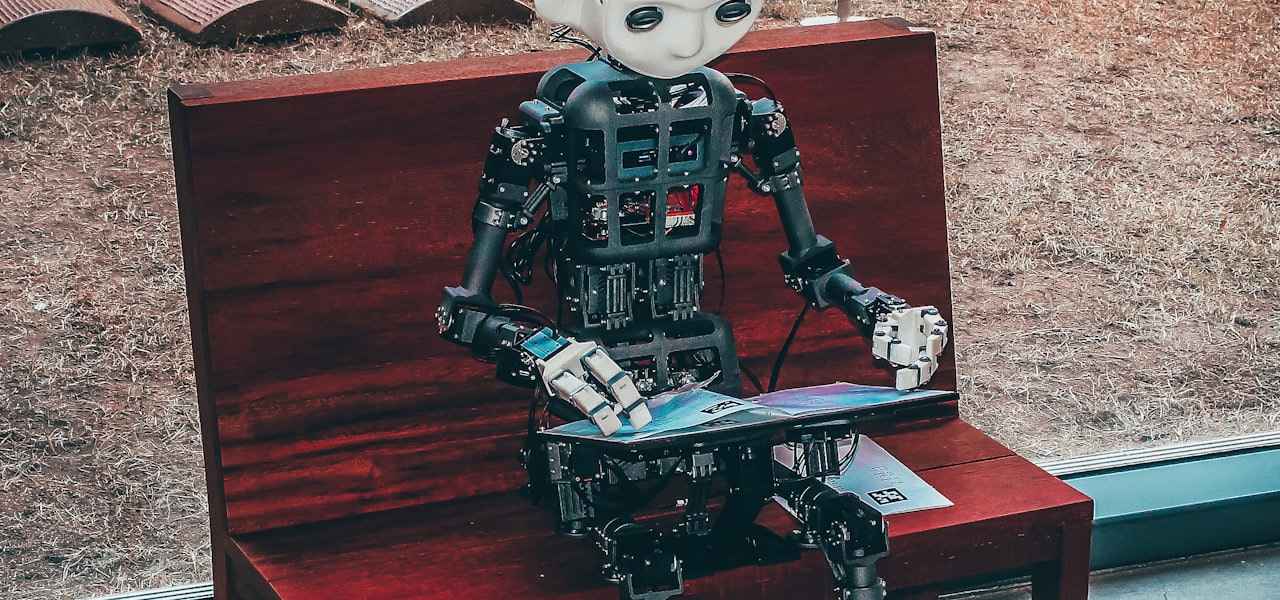
In mechanical engineering, a kinematic chain is an assembly of rigid bodies connected by joints to provide constrained motion that is the mathematical model for a mechanical system. As the word chain suggests, the rigid bodies, or links, are constrained by their connections to other links. An example is the simple open chain formed by links connected in series, like the usual chain, which is the kinematic model for a typical robot manipulator. Mathematical models of the connections, or joints, between two links are termed kinematic pairs. Kinematic pairs model the hinged and sliding joints fundamental to robotics, often called lower pairs and the surface contact joints critical to cams and gearing, called higher pairs. These joints are generally modeled as holonomic constraints. A kinematic diagram is a schematic of the mechanical system that shows the kinematic chain. The modern use of kinematic chains includes analysis of Linkages (mechanical), compliance that arises from flexure joints in precision mechanisms, link compliance in compliant mechanisms and micro-electro-mechanical systems, and cable compliance in cable robotic and tensegrity systems. == Mobility formula == The degrees of freedom, or mobility, of a kinematic chain is the number of parameters that define the configuration of the chain. A system of n rigid bodies moving in space has 6n degrees of freedom measured relative to a fixed frame. This frame is included in the count of bodies, so that mobility does not depend on link that forms the fixed frame. This means the degree-of-freedom of this system is M = 6(N − 1), where N = n + 1 is the number of moving bodies plus the fixed body. Joints that connect bodies impose constraints. Specifically, hinges and sliders each impose five constraints and therefore remove five degrees of freedom. It is convenient to define the number of constraints c that a joint imposes in terms of the joint's freedom f, where c = 6 − f. In the case of a hinge or slider, which are one-degree-of-freedom joints, have f = 1 and therefore c = 6 − 1 = 5. The result in general where d {\displaystyle d} is the degrees of freedom for the mobility of a kinematic chain formed from n moving links and j joints each with freedom fi, i = 1, 2, …, j, is given by M = d n − ∑ i = 1 j ( d − f i ) = d ( N − 1 − j ) + ∑ i = 1 j f i {\displaystyle M=dn-\sum _{i=1}^{j}(d-f_{i})=d(N-1-j)+\sum _{i=1}^{j}f_{i}} Where N is the total number of links and includes the fixed link. Spacial linkages used d = 6 {\displaystyle d=6} and planar linkages use d = 3 {\displaystyle d=3} . This result is known as the Chebychev–Grübler–Kutzbach criterion. == Analysis of kinematic chains == The constraint equations of a kinematic chain couple the range of movement allowed at each joint to the dimensions of the links in the chain, and form algebraic equations that are solved to determine the configuration of the chain associated with specific values of input parameters, called degrees of freedom. The constraint equations for a kinematic chain are obtained using rigid transformations [Z] to characterize the relative movement allowed at each joint and separate rigid transformations [X] to define the dimensions of each link. In the case of a serial open chain, the result is a sequence of rigid transformations alternating joint and link transformations from the base of the chain to its end link, which is equated to the specified position for the end link. A chain of n links connected in series has the kinematic equations, [ T ] = [ Z 1 ] [ X 1 ] [ Z 2 ] [ X 2 ] ⋯ [ X n − 1 ] [ Z n ] , {\displaystyle [T]=[Z_{1}][X_{1}][Z_{2}][X_{2}]\cdots [X_{n-1}][Z_{n}],\!} where [T] is the transformation locating the end-link—notice that the chain includes a "zeroth" link consisting of the ground frame to which it is attached. These equations are called the forward kinematics equations of the serial chain. Kinematic chains of a wide range of complexity are analyzed by equating the kinematics equations of serial chains that form loops within the kinematic chain. These equations are often called loop equations. The complexity (in terms of calculating the forward and inverse kinematics) of the chain is determined by the following factors: Its topology: a serial chain, a parallel manipulator, a tree structure, or a graph. Its geometrical form: how are neighbouring joints spatially connected to each other? Explanation Two or more rigid bodies in space are collectively called a rigid body system. We can hinder the motion of these independent rigid bodies with kinematic constraints. Kinematic constraints are constraints between rigid bodies that result in the decrease of the degrees of freedom of rigid body system. == Synthesis of kinematic chains == The constraint equations of a kinematic chain can be used in reverse to determine the dimensions of the links from a specification of the desired movement of the system. This is termed kinematic synthesis. Perhaps the most developed formulation of kinematic synthesis is for four-bar linkages, which is known as Burmester theory. Ferdinand Freudenstein is often called the father of modern kinematics for his contributions to the kinematic synthesis of linkages beginning in the 1950s. His use of the newly developed computer to solve Freudenstein's equation became the prototype of computer-aided design systems. This work has been generalized to the synthesis of spherical and spatial mechanisms.