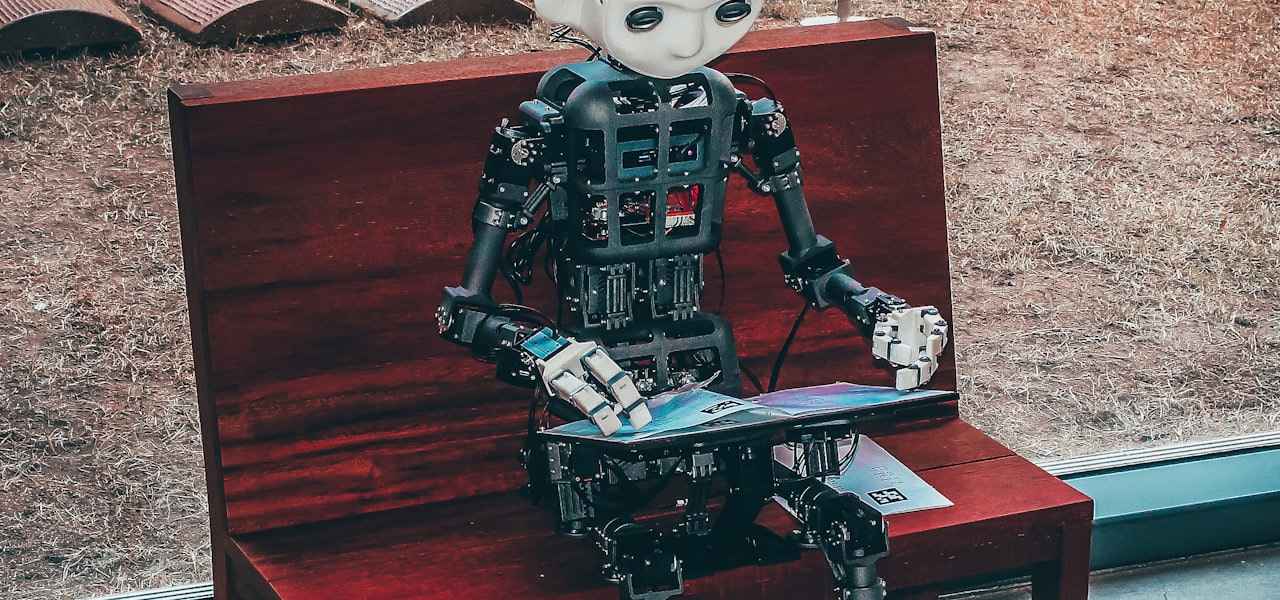
In knowledge-based systems, agents choose actions based on the principle of rationality to move closer to a desired goal. The agent is able to make decisions based on knowledge it has about the world (see knowledge level). But for the agent to actually change its state, it must use whatever means it has available. This level of description for the agent's behavior is the symbol level. The term was coined by Allen Newell in 1982. For example, in a computer program, the knowledge level consists of the information contained in its data structures that it uses to perform certain actions. The symbol level consists of the program's algorithms, the data structures themselves, and so on.
Sparrow (chatbot)
Sparrow is a chatbot developed by the artificial intelligence research lab DeepMind, a subsidiary of Alphabet Inc. It is designed to answer users' questions correctly, while reducing the risk of unsafe and inappropriate answers. One motivation behind Sparrow is to address the problem of language models producing incorrect, biased or potentially harmful outputs. Sparrow is trained using human judgements, in order to be more “Helpful, Correct and Harmless” compared to baseline pre-trained language models. The development of Sparrow involved asking paid study participants to interact with Sparrow, and collecting their preferences to train a model of how useful an answer is. To improve accuracy and help avoid the problem of hallucinating incorrect answers, Sparrow has the ability to search the Internet using Google Search in order to find and cite evidence for any factual claims it makes. To make the model safer, its behaviour is constrained by a set of rules, for example "don't make threatening statements" and "don't make hateful or insulting comments", as well as rules about possibly harmful advice, and not claiming to be a person. During development study participants were asked to converse with the system and try to trick it into breaking these rules. A 'rule model' was trained on judgements from these participants, which was used for further training. Sparrow was introduced in a paper in September 2022, titled "Improving alignment of dialogue agents via targeted human judgements"; however, the bot was not released publicly. DeepMind CEO Demis Hassabis said DeepMind is considering releasing Sparrow for a "private beta" some time in 2023. == Training == Sparrow is a deep neural network based on the transformer machine learning model architecture. It is fine-tuned from DeepMind's Chinchilla AI pre-trained large language model (LLM), which has 70 Billion parameters. Sparrow is trained using reinforcement learning from human feedback (RLHF), although some supervised fine-tuning techniques are also used. The RLHF training utilizes two reward models to capture human judgements: a “preference model” that predicts what a human study participant would prefer and a “rule model” that predicts if the model has broken one of the rules. == Limitations == Sparrow's training data corpus is mainly in English, meaning it performs worse in other languages. When adversarially probed by study participants it breaks the rules 8% of the time; however, this is still three times lower than the baseline prompted pre-trained model (Chinchilla).
Predictor–corrector method
In numerical analysis, predictor–corrector methods belong to a class of algorithms designed to integrate ordinary differential equations – to find an unknown function that satisfies a given differential equation. All such algorithms proceed in two steps: The initial, "prediction" step, starts from a function fitted to the function-values and derivative-values at a preceding set of points to extrapolate ("anticipate") this function's value at a subsequent, new point. The next, "corrector" step refines the initial approximation by using the predicted value of the function and another method to interpolate that unknown function's value at the same subsequent point. == Predictor–corrector methods for solving ODEs == When considering the numerical solution of ordinary differential equations (ODEs), a predictor–corrector method typically uses an explicit method for the predictor step and an implicit method for the corrector step. === Example: Euler method with the trapezoidal rule === A simple predictor–corrector method (known as Heun's method) can be constructed from the Euler method (an explicit method) and the trapezoidal rule (an implicit method). Consider the differential equation y ′ = f ( t , y ) , y ( t 0 ) = y 0 , {\displaystyle y'=f(t,y),\quad y(t_{0})=y_{0},} and denote the step size by h {\displaystyle h} . First, the predictor step: starting from the current value y i {\displaystyle y_{i}} , calculate an initial guess value y ~ i + 1 {\displaystyle {\tilde {y}}_{i+1}} via the Euler method, y ~ i + 1 = y i + h f ( t i , y i ) . {\displaystyle {\tilde {y}}_{i+1}=y_{i}+hf(t_{i},y_{i}).} Next, the corrector step: improve the initial guess using trapezoidal rule, y i + 1 = y i + 1 2 h ( f ( t i , y i ) + f ( t i + 1 , y ~ i + 1 ) ) . {\displaystyle y_{i+1}=y_{i}+{\tfrac {1}{2}}h{\bigl (}f(t_{i},y_{i})+f(t_{i+1},{\tilde {y}}_{i+1}){\bigr )}.} That value is used as the next step. === PEC mode and PECE mode === There are different variants of a predictor–corrector method, depending on how often the corrector method is applied. The Predict–Evaluate–Correct–Evaluate (PECE) mode refers to the variant in the above example: y ~ i + 1 = y i + h f ( t i , y i ) , y i + 1 = y i + 1 2 h ( f ( t i , y i ) + f ( t i + 1 , y ~ i + 1 ) ) . {\displaystyle {\begin{aligned}{\tilde {y}}_{i+1}&=y_{i}+hf(t_{i},y_{i}),\\y_{i+1}&=y_{i}+{\tfrac {1}{2}}h{\bigl (}f(t_{i},y_{i})+f(t_{i+1},{\tilde {y}}_{i+1}){\bigr )}.\end{aligned}}} It is also possible to evaluate the function f only once per step by using the method in Predict–Evaluate–Correct (PEC) mode: y ~ i + 1 = y i + h f ( t i , y ~ i ) , y i + 1 = y i + 1 2 h ( f ( t i , y ~ i ) + f ( t i + 1 , y ~ i + 1 ) ) . {\displaystyle {\begin{aligned}{\tilde {y}}_{i+1}&=y_{i}+hf(t_{i},{\tilde {y}}_{i}),\\y_{i+1}&=y_{i}+{\tfrac {1}{2}}h{\bigl (}f(t_{i},{\tilde {y}}_{i})+f(t_{i+1},{\tilde {y}}_{i+1}){\bigr )}.\end{aligned}}} Additionally, the corrector step can be repeated in the hope that this achieves an even better approximation to the true solution. If the corrector method is run twice, this yields the PECECE mode: y ~ i + 1 = y i + h f ( t i , y i ) , y ^ i + 1 = y i + 1 2 h ( f ( t i , y i ) + f ( t i + 1 , y ~ i + 1 ) ) , y i + 1 = y i + 1 2 h ( f ( t i , y i ) + f ( t i + 1 , y ^ i + 1 ) ) . {\displaystyle {\begin{aligned}{\tilde {y}}_{i+1}&=y_{i}+hf(t_{i},y_{i}),\\{\hat {y}}_{i+1}&=y_{i}+{\tfrac {1}{2}}h{\bigl (}f(t_{i},y_{i})+f(t_{i+1},{\tilde {y}}_{i+1}){\bigr )},\\y_{i+1}&=y_{i}+{\tfrac {1}{2}}h{\bigl (}f(t_{i},y_{i})+f(t_{i+1},{\hat {y}}_{i+1}){\bigr )}.\end{aligned}}} The PECEC mode has one fewer function evaluation than PECECE mode. More generally, if the corrector is run k times, the method is in P(EC)k or P(EC)kE mode. If the corrector method is iterated until it converges, this could be called PE(CE)∞.
Exploratory search
Exploratory search is a specialization of information exploration which represents the activities carried out by searchers who are: unfamiliar with the domain of their goal (i.e. need to learn about the topic in order to understand how to achieve their goal) or unsure about the ways to achieve their goals (either the technology or the process) or unsure about their goals in the first place. Exploratory search is distinguished from known-item search, for which the searcher has a particular target in mind. Consequently, exploratory search covers a broader class of activities than typical information retrieval, such as investigating, evaluating, comparing, and synthesizing, where new information is sought in a defined conceptual area; exploratory data analysis is another example of an information exploration activity. Typically, therefore, such users generally combine querying and browsing strategies to foster learning and investigation. == History == Exploratory search is a topic that has grown from the fields of information retrieval and information seeking but has become more concerned with alternatives to the kind of search that has received the majority of focus (returning the most relevant documents to a Google-like keyword search). The research is motivated by questions like "What if the user doesn't know which keywords to use?" or "What if the user isn't looking for a single answer?" Consequently, research has begun to focus on defining the broader set of information behaviors in order to learn about the situations when a user is, or feels, limited by only having the ability to perform a keyword search. In the last few years, a series of workshops has been held at various related and key events. In 2005, the Exploratory Search Interfaces workshop focused on beginning to define some of the key challenges in the field. Since then a series of other workshops has been held at related conferences: Evaluating Exploratory Search at SIGIR06 and Exploratory Search and HCI at CHI07 (in order to meet with the experts in human–computer interaction). In March 2008, an Information Processing and Management special issue focused particularly on the challenges of evaluating exploratory search, given the reduced assumptions that can be made about scenarios of use. In June 2008, the National Science Foundation sponsored an invitational workshop to identify a research agenda for exploratory search and similar fields for the coming years. == Research challenges == === Important scenarios === With the majority of research in the information retrieval community focusing on typical keyword search scenarios, one challenge for exploratory search is to further understand the scenarios of use for when keyword search is not sufficient. An example scenario, often used to motivate the research by mSpace, states: if a user does not know much about classical music, how should they even begin to find a piece that they might like. Similarly, for patients or their carers, if they don't know the right keywords for their health problems, how can they effectively find useful health information for themselves? === Designing new interfaces === With one of the motivations being to support users when keyword search is not enough, some research has focused on identifying alternative user interfaces and interaction models that support the user in different ways. An example is faceted search which presents diverse category-style options to the users, so that they can choose from a list instead of guess a possible keyword query. Many of the interactive forms of search, including faceted browsers, are being considered for their support of exploratory search conditions. Computational cognitive models of exploratory search have been developed to capture the cognitive complexities involved in exploratory search. Model-based dynamic presentation of information cues are proposed to facilitate exploratory search performance. === Evaluating interfaces === As the tasks and goals involved with exploratory search are largely undefined or unpredictable, it is very hard to evaluate systems with the measures often used in information retrieval. Accuracy was typically used to show that a user had found a correct answer, but when the user is trying to summarize a domain of information, the correct answer is near impossible to identify, if not entirely subjective (for example: possible hotels to stay in Paris). In exploration, it is also arguable that spending more time (where time efficiency is typically desirable) researching a topic shows that a system provides increased support for investigation. Finally, and perhaps most importantly, giving study participants a well specified task could immediately prevent them from exhibiting exploratory behavior. === Models of exploratory search behavior === There have been recent attempts to develop a process model of exploratory search behavior, especially in social information system (e.g., see models of collaborative tagging. The process model assumes that user-generated information cues, such as social tags, can act as navigational cues that facilitate exploration of information that others have found and shared with other users on a social information system (such as social bookmarking system). These models provided extension to existing process model of information search that characterizes information-seeking behavior in traditional fact-retrievals using search engines. Recent development in exploratory search is often concentrated in predicting users' search intents in interaction with the user. Such predictive user modeling, also referred as intent modeling, can help users to get accustomed to a body of domain knowledge and help users to make sense of the potential directions to be explored around their initial, often vague, expression of information needs. == Major figures == Key figures, including experts from both information seeking and human–computer interaction, are: Marcia Bates Nicholas Belkin Gary Marchionini m.c. schraefel Ryen W. White
Aidoc
Aidoc Medical is an Israeli technology company that develops computer-aided simple triage and notification systems. Aidoc has obtained U.S. Food and Drug Administration and CE mark approval for its stroke, pulmonary embolism, cervical fracture, intracranial hemorrhage, intra-abdominal free gas, and incidental pulmonary embolism algorithms. Aidoc algorithms are in use in more than 900 hospitals and imaging centers, including Montefiore Nyack Hospital, LifeBridge Health, LucidHealth, Yale New Haven Hospital, Cedars-Sinai Medical Center, University of Rochester Medical Center, and Sheba Medical Center. == History == Aidoc was founded in 2016 by Elad Walach as the CEO, Michael Braginsky as the CTO and Guy Reiner as the VP. In April 2017, the company raised $7M, led by TLV Partners, and in April 2019, the company raised another $27M, led by Square Peg capital. There have been several additional rounds of funding as well, bringing Aidoc's total investment to $370M as of July 2025. In August 2018, Aidoc gained FDA clearance for its intracranial hemorrhage system, and in May 2019 it received clearance for the pulmonary embolism system. In January 2020, the system for detecting large-vessel occlusions (LVOs) in head CTA examinations obtained FDA clearance. In October 2024, it was reported that Aidoc is working with NVIDIA to develop a framework for deployment and integration of artificial intelligence tools in healthcare. The Blueprint for Resilient Integration and Deployment of Guided Excellence (BRIDGE) is a guideline to facilitate AI adoption in the healthcare industry. == Products and market == Aidoc has developed a suite of artificial intelligence products that flag both time-sensitive and time-consuming (for the radiologist) abnormalities across the body. The algorithms are developed with large quantities of data to provide diagnostic aid for a broad set of pathologies. The company offers an array of algorithms that span across the body, including for intracranial hemorrhage, spine fractures (C, T & L), free air in the abdomen, pulmonary embolism, and more. It developed "Always-on AI", a term coined by Elad Walach that refers to a type of artificial intelligence that is "Always-on—constantly running in the background and automatically analyzing medical imaging data, identifying urgent findings, and sparing radiologists from "drowning" in vast amounts of irrelevant data. Aidoc's solutions cover medical conditions prevalent in all settings (ED/inpatient/outpatient), including level 1 trauma centers, outpatient imaging centers, teleradiology groups and, are set up in over 200 medical centers worldwide. Notable customers include the University of Rochester Medical Center and Global Diagnostics Australia. Aidoc announced in 2024 that its new Clinical AI Reasoning Engine (CARE1) had been submitted for FDA approval. In September 2025 Aidoc received a "Breakthrough Device Designation" from the FDA for a new multi-triage solution that spans numerous acute findings in CT scans. Aidoc's CARE1 foundation model was the basis of the workflow on which the designation was made, enabling simultaneous coverage of multiple pathologies. This new designation allows parallel FDA review of multiple indications under a single submission. In April 2026, Aidoc raised million in a Series E funding round led by Growth Equity at Goldman Sachs Alternatives, with participation from General Catalyst and NVentures. The financing brought the company's total funding to over million. == Clinical Research == A clinical study on Aidoc’ accuracy of deep convolutional neural networks for the detection of pulmonary embolism (PE) on CT pulmonary angiograms (CTPAs) was performed by the University Hospital of Basel and presented at the European Congress of Radiology, showing that the Aidoc algorithm reached 93% sensitivity and 95% specificity. Clinical research has also been performed to test the diagnostic performance of Aidoc's deep learning-based triage system for the flagging of acute findings in abdominal computed tomography (CT) examinations. Overall, the algorithm achieved 93% sensitivity (91/98, 7 false negatives) and 97% specificity (93/96, 3 false-positive) in the detection of acute abdominal findings. Additional clinical research on Aidoc's Intracranial hemorrhage algorithm accuracy was presented at the European Congress of Radiology by Antwerp University Hospital, evaluating the use of its deep learning algorithm for the detection of intracranial hemorrhage on non-contrast enhanced CT of the brain. The University of Washington completed a study on the accuracy of Aidoc's intracranial hemorrhage algorithm.
Poop Map
Poop Map is a social app where users can track on a map where and when they defecate. In addition to logging location and time of each bowel movement, users can also add a photo, "like" other users' logs, and rate each account. The social elements of the app allow for groups of users to create a competitive league. Certain behaviors unlock achievements in-app. == Development == The app was created by app developer Nino Uzelac. It was launched in July 2013. == Popularity == The app charted at number one on the Apple App Store charts in 2021 after going viral on TikTok. As of September 2024, the app has a 4.8 rating on the App Store and more than 58,000 ratings. It also has more than one million downloads on the Google Play Store. Poop Map is notably popular among hikers, and has been written about in the outdoors magazine Outside.
Document
A document is a written, drawn, presented, or memorialized representation of thought, often the manifestation of non-fictional, as well as fictional, content. The etymology of the word "document" derives from the Latin documentum, which denotes a "teaching" or "lesson": the verb doceō denotes "to teach". Historically, the term "document" was usually used to indicate written proof useful as evidence of a truth or fact. In the Computer Age, the term "document" typically refers to a primarily textual computer file, encompassing its structural and format elements, such as fonts, colors, and images. In the contemporary era, the definition of "document" has expanded beyond its traditional medium, such as paper, to encompass electronic documents as well. History, events, examples, opinions, stories, and creativity can all be expressed in documents. "Documentation" is distinct because it has more denotations than "document". Documents are also distinguished from "realia", which are three-dimensional objects that would otherwise satisfy the definition of "document" because they memorialize or represent thought. Documents are usually considered to be two-dimensional representations. == Abstract definitions == The concept of "document" has been defined by Suzanne Briet as "any concrete or symbolic indication, preserved or recorded, for reconstructing or for proving a phenomenon, whether physical or mental." An often-cited article concludes that "the evolving notion of document" among Jonathan Priest, Paul Otlet, Briet, Walter Schürmeyer, and the other documentalists increasingly emphasized whatever functioned as a document rather than traditional physical forms of documents. The shift to digital technology would seem to make this distinction even more important. David M. Levy has said that an emphasis on the technology of digital documents has impeded our understanding of digital documents as documents. A conventional document, such as a mail message or a technical report, exists physically in digital technology as a string of bits, as does everything else in a digital environment. As an object of study, it has been made into a document. It has become physical evidence by those who study it. "Document" is defined in library and information science and documentation science as a fundamental, abstract idea: the word denotes everything that may be represented or memorialized to serve as evidence. The classic example provided by Briet is an antelope: "An antelope running wild on the plains of Africa should not be considered a document[;] she rules. But if it were to be captured, taken to a zoo and made an object of study, it has been made into a document. It has become physical evidence being used by those who study it. Indeed, scholarly articles written about the antelope are secondary documents, since the antelope itself is the primary document." This opinion has been interpreted as an early expression of actor–network theory. == Kinds == A document can be structured, like tabular documents, lists, forms, or scientific charts, semi-structured like a book or a newspaper article, or unstructured like a handwritten note. Documents are sometimes classified as secret, private, or public. They may also be described as drafts or proofs. When a document is copied, the source is denominated the "original". Documents are used in numerous fields, e.g.: Academia: manuscript, thesis, paper, journal, chart, and technical drawing Media: mock-up, script, image, photography, and newspaper article Administration, law, and politics: application, brief, certificate, commission, constitutional document, form, gazette, identity document, license, manifesto, summons, census, and white paper Business: invoice, request for proposal, proposal, contract, packing slip, manifest, report (detailed and summary), spreadsheet, material safety data sheet, waybill, bill of lading, financial statement, nondisclosure agreement (NDA), mutual nondisclosure agreement, and user guide Geography and planning: topographic map, cadastre, legend, and architectural plan Such standard documents can be drafted based on a template. == Drafting == The page layout of a document is how information is graphically arranged in the space of the document, e.g., on a page. If the appearance of the document is of concern, the page layout is generally the responsibility of a graphic designer. Typography concerns the design of letter and symbol forms and their physical arrangement in the document (see typesetting). Information design concerns the effective communication of information, especially in industrial documents and public signs. Simple textual documents may not require visual design and may be drafted only by an author, clerk, or transcriber. Forms may require a visual design for their initial fields, but not to complete the forms. == Media == Traditionally, the medium of a document was paper and the information was applied to it in ink, either by handwriting (to make a manuscript) or by a mechanical process (e.g., a printing press or laser printer). Today, some short documents also may consist of sheets of paper stapled together. Historically, documents were inscribed with ink on papyrus (starting in ancient Egypt) or parchment; scratched as runes or carved on stone using a sharp tool, e.g., the Tablets of Stone described in the Bible; stamped or incised in clay and then baked to make clay tablets, e.g., in the Sumerian and other Mesopotamian civilizations. The papyrus or parchment was often rolled into a scroll or cut into sheets and bound into a codex (book). Contemporary electronic means of memorializing and displaying documents include: Monitor of a desktop computer, laptop, tablet; optionally with a printer to produce a hard copy; Personal digital assistant; Dedicated e-book device; Electronic paper, typically, using the Portable Document Format (PDF); Information appliance; Digital audio player; and Radio and television service provider. Digital documents usually require a specific file format to be presentable in a specific medium. == In law == Documents in all forms frequently serve as material evidence in criminal and civil proceedings. The forensic analysis of such a document is within the scope of questioned document examination. To catalog and manage the large number of documents that may be produced during litigation, Bates numbering is often applied to all documents in the lawsuit so that each document has a unique, arbitrary, identification number.