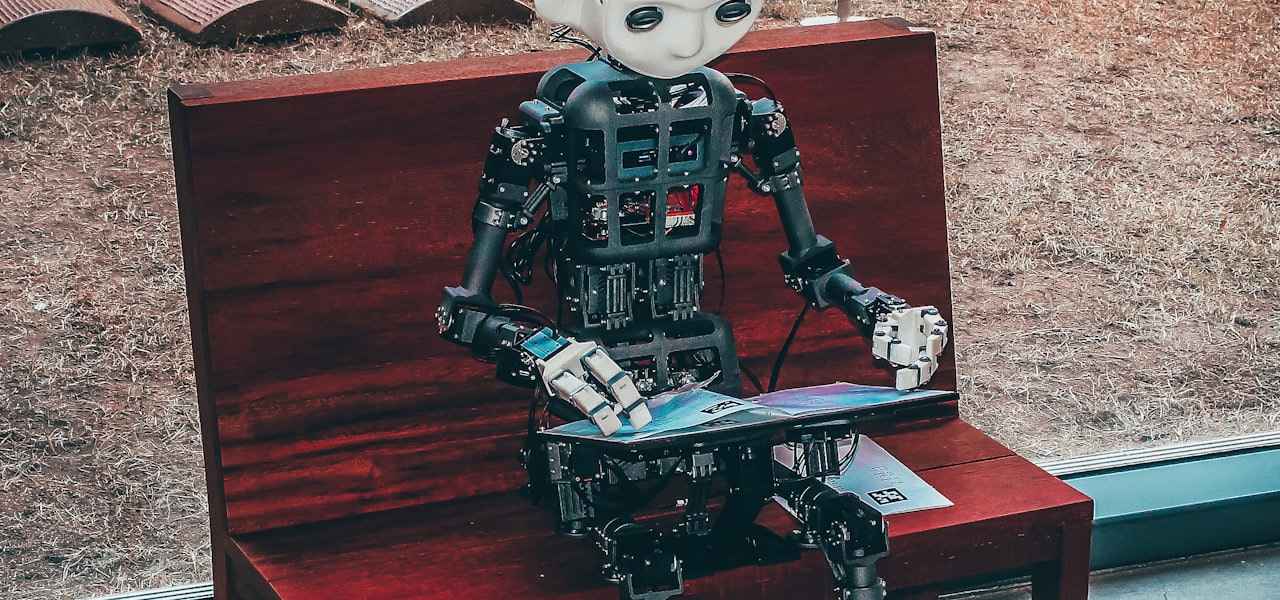
Agent-assisted automation is a type of call center technology that automates elements of what the call center agent 1) does with his/her desktop tools and/or 2) says to customers during the call using pre-recorded audio. It is a relatively new category of call center technology that shows promise in improving call center productivity and compliance. == Types of agent-assisted automation == === Pre-recorded audio === Pre-recorded audio (sometimes referred to as soundboard (computer program) or as soundboard technology) is another form of agent-assisted automation. The purpose of using pre-recorded messages is to increase the probability (and in some cases error-proof the process so) that the right information is provided to customers at the right time. The required disclosures are pre-recorded to ensure accuracy and understandability. By integrating the recordings with the customer relationship management software, the right combination of disclosures can be played based on the combination of goods and services the customer purchased. The integration with the customer relationship management software also ensures that the order cannot be submitted until the disclosures are played, essentially error-proofing (poka-yoke) the process of ensuring the customer gets all the required consumer protection information. Phone surveys are ideal applications of this technology. Whether surveying market preferences or political views, the pre-recorded audio with an agent listening allows the questions to be asked in the same way every time, uninfluenced by the agents' fatigue levels, accents, or their own views. === Fraud prevention === Fraud prevention is a specialized type of agent-assisted automation focused on reducing ID theft and credit card fraud. ID theft and credit card fraud are huge threats for call centers and their customers and few good solutions exist, but new agent-assisted automation solutions are producing promising results. The technology allows the agents to remain on the phone while the customers use their phone key pads to enter the information. The tones are masked and the information passes directly into the customer relationship management system or payment gateway in the case of credit card transactions. The automation essentially makes it impossible for call center agents and also call center personnel that might be monitoring the calls to steal the credit card number, social security number, or other personally identifiable information. === Outbound telemarketing === Another specialized application space of agent-assisted automation is in outbound telemarketing, which goes under numerous headings including outbound prospecting, cold calling, solicitation, fund-raising, etc. Turnover is high among agents engaged in this kind of work because the task is tedious and emotionally difficult. It is tedious because the agent spends the bulk of their day, not talking to qualified leads, but in getting wrong numbers and answering machines. == Benefits == Just as automation has benefited manufacturing by reducing the mental and physical effort required of workers while simultaneously improving throughput, quality, and safety, agent-assisted automation is improving call center results while reducing the tiring aspects of the job for agents. In some cases, the agent-assisted automation streamlines the process and allows calls to be handled more quickly. By eliminating cutting and pasting from one application to another, by auto-navigating applications, and by providing a single view of the customer, agent-assisted automation can reduce call handle time and increase agent productivity. Second, in theory, the more steps that can be automated and the more logic that can be built into the call flow (e.g., if the customer buys items 2 and 9, then disclosures a, c, and f are read by the pre-recorded audio), then companies may be able to reduce the amount of training that is required of the agents while at the same time ensuring more consistency and accuracy. However, no published studies have reported this result yet. But an even larger problem in call centers is between-agent variation in behavior and results. Agents differ in the amount of training and coaching they receive, they differ in the amount of experience they have, their jobs are repetitious and tiring, and the process and procedures the agents are supposed to follow constantly change. Moreover, there are significant individual differences between agents in their intelligence, personality, motivations, etc. which all affect performance. Despite the large amount of money call centers have spent over decades trying to reduce between-agent variation, the problem is still so prevalent that one large study of customer interactions with call centers found that a customer's experience was completely a function of the quality of the agent who happened to answer the phone. Therefore, the most significant benefit of agent-assisted automation may prove to be in how the automation error-proofs or poka-yoke the process and ensures that something that needs to be done or said happens every time. Properly implemented, the between-agent variation for whatever step of the process the automation is applied to may be able to be reduced to near zero. This is especially important in a collection agency whose processes and procedures are closely regulated by the Fair Debt Collection Practices Act.
Cloud-Based Secure File Transfer
Cloud-Based Secure File Transfer is a managed or hosted file transfer service that provides cloud storage that can be accessed via SSH File Transfer Protocol (SFTP). These services allow secure, reliable file transfers while offering the scalability, redundancy, and high availability of cloud infrastructure. == Technical overview == The evolution of file transfer protocols began with File Transfer Protocol (FTP) and SSH File Transfer Protocol (SFTP). SFTP offered enhanced security through the use of SSH (Secure Shell) encryption, which addressed many of the security concerns associated with traditional FTP. Over time, as businesses increasingly adopted cloud infrastructure, the demand for services that integrate secure file transfer with cloud storage led to the rise of Cloud-Based Secure File Transfer services. These services combine the benefits of secure, encrypted file transfer with the scalability and flexibility of cloud-based storage systems. Traditional on-premises SFTP typically involves setting up and managing physical or virtual servers to handle file transfers. In contrast, Cloud-Based Secure File Transfer utilizes managed cloud infrastructure, such as AWS EC2, Azure VMs, or Google Cloud, to automate scaling, ensure redundancy, and provide high availability. These cloud environments can be configured to automatically scale with demand, enabling businesses to handle large volumes of data transfers without the need for extensive physical hardware. == Features == Scalability and availability: Cloud-Based Secure File Transfer services are inherently scalable, with features like load balancing, multi-region deployments, and auto-scaling groups that adjust resources in response to traffic spikes. This ensures that the system can handle varying workloads and provides continuous availability, even during high-demand periods. Cost-effectiveness: By eliminating the need for physical infrastructure and reducing ongoing server maintenance costs, Cloud-Based Secure File Transfer services offer significant cost savings compared to traditional on-premises services. Cloud providers typically offer pay-as-you-go pricing models, where users only pay for the resources they use, further optimizing costs. Security and compliance: Cloud-Based Secure File Transfer products offer strong security measures, including end-to-end encryption, key management, detailed logging, and auditing. These services are often compliant with industry regulations such as HIPAA (Health Insurance Portability and Accountability Act), GDPR (General Data Protection Regulation), and SOC 2 (System and Organization Controls), ensuring that data transfers meet necessary security and privacy standards. == Cloud-Based Secure File Transfer providers == == Uses == Cloud-Based Secure File Transfer is used across various industries to securely transfer sensitive data and integrate into business workflows. In healthcare, Cloud-Based Secure File Transfer is essential for securely transferring electronic Protected Health Information (ePHI), ensuring compliance with regulations like HIPAA. In financial institutions, it is used to protect sensitive financial data during transfer, maintaining privacy and security. Data analytics also benefits from Cloud-Based Secure File Transfer, offering a secure and efficient method for transferring large datasets between systems or partners. Technically, Cloud-Based Secure File Transfer is often integrated into enterprise workflows through automated file transfers, using scripting or APIs. It also plays a key role in cloud backup and disaster recovery, ensuring that files are securely transferred and stored in cloud environments, which supports business continuity. However, businesses must address certain implementation challenges. Despite its secure design, Cloud-Based Secure File Transfer is not immune to risks such as misconfigured SSH keys, improper access control, or inadequate encryption. Regular security audits and careful configuration management are necessary to minimize the risk of data breaches. Additionally, integrating Cloud-Based Secure File Transfer with legacy systems can present challenges, such as incompatible APIs or outdated authentication methods. == Comparisons with related technologies == Cloud-Based Secure File Transfer differs from traditional SFTP primarily in its deployment and management model. Traditional SFTP services are typically hosted on-premises or on virtual servers, requiring manual configuration, ongoing infrastructure maintenance, and security management by in-house IT teams. In contrast, Cloud-Based Secure File Transfer is offered as a Software-as-a-Service (SaaS) service, reducing infrastructure overhead by eliminating the need for dedicated hardware or virtual machines. This model simplifies management through centralized web-based interfaces, automated updates, and built-in scalability. While Cloud-Based Secure File Transfer is focused on providing secure file transfers over the SFTP protocol, Managed File Transfer (MFT) platforms generally support a broader range of protocols, including FTP, FTPS, HTTP/S, and AS2. MFT services often include advanced features such as end-to-end encryption, extensive automation, compliance reporting, and integration with enterprise systems. Cloud-Based Secure File Transfer services may offer some of these features but are typically more lightweight and streamlined, targeting organizations seeking a secure and scalable alternative to traditional SFTP without the full suite of MFT capabilities. As such, Cloud-Based Secure File Transfer can be seen as a specialized subset within the broader managed file transfer ecosystem.
Neural cryptography
Neural cryptography is a branch of cryptography dedicated to analyzing the application of stochastic algorithms, especially artificial neural network algorithms, for use in encryption and cryptanalysis. == Definition == Artificial neural networks are well known for their ability to selectively explore the solution space of a given problem. This feature finds a natural niche of application in the field of cryptanalysis. At the same time, neural networks offer a new approach to attack ciphering algorithms based on the principle that any function could be reproduced by a neural network, which is a powerful proven computational tool that can be used to find the inverse-function of any cryptographic algorithm. The ideas of mutual learning, self learning, and stochastic behavior of neural networks and similar algorithms can be used for different aspects of cryptography, like public-key cryptography, solving the key distribution problem using neural network mutual synchronization, hashing or generation of pseudo-random numbers. Another idea is the ability of a neural network to separate space in non-linear pieces using "bias". It gives different probabilities of activating the neural network or not. This is very useful in the case of Cryptanalysis. Two names are used to design the same domain of research: Neuro-Cryptography and Neural Cryptography. The first work that it is known on this topic can be traced back to 1995 in an IT Master Thesis. == Applications == In 1995, Sebastien Dourlens applied neural networks to cryptanalyze DES by allowing the networks to learn how to invert the S-tables of the DES. The bias in DES studied through Differential Cryptanalysis by Adi Shamir is highlighted. The experiment shows about 50% of the key bits can be found, allowing the complete key to be found in a short time. Hardware application with multi micro-controllers have been proposed due to the easy implementation of multilayer neural networks in hardware. One example of a public-key protocol is given by Khalil Shihab . He describes the decryption scheme and the public key creation that are based on a backpropagation neural network. The encryption scheme and the private key creation process are based on Boolean algebra. This technique has the advantage of small time and memory complexities. A disadvantage is the property of backpropagation algorithms: because of huge training sets, the learning phase of a neural network is very long. Therefore, the use of this protocol is only theoretical so far. == Neural key exchange protocol == The most used protocol for key exchange between two parties A and B in the practice is Diffie–Hellman key exchange protocol. Neural key exchange, which is based on the synchronization of two tree parity machines, should be a secure replacement for this method. Synchronizing these two machines is similar to synchronizing two chaotic oscillators in chaos communications. === Tree parity machine === The tree parity machine is a special type of multi-layer feedforward neural network. It consists of one output neuron, K hidden neurons and K×N input neurons. Inputs to the network take three values: x i j ∈ { − 1 , 0 , + 1 } {\displaystyle x_{ij}\in \left\{-1,0,+1\right\}} The weights between input and hidden neurons take the values: w i j ∈ { − L , . . . , 0 , . . . , + L } {\displaystyle w_{ij}\in \left\{-L,...,0,...,+L\right\}} Output value of each hidden neuron is calculated as a sum of all multiplications of input neurons and these weights: σ i = sgn ( ∑ j = 1 N w i j x i j ) {\displaystyle \sigma _{i}=\operatorname {sgn}(\sum _{j=1}^{N}w_{ij}x_{ij})} Signum is a simple function, which returns −1,0 or 1: sgn ( x ) = { − 1 if x < 0 , 0 if x = 0 , 1 if x > 0. {\displaystyle \operatorname {sgn}(x)={\begin{cases}-1&{\text{if }}x<0,\\0&{\text{if }}x=0,\\1&{\text{if }}x>0.\end{cases}}} If the scalar product is 0, the output of the hidden neuron is mapped to −1 in order to ensure a binary output value. The output of neural network is then computed as the multiplication of all values produced by hidden elements: τ = ∏ i = 1 K σ i {\displaystyle \tau =\prod _{i=1}^{K}\sigma _{i}} Output of the tree parity machine is binary. === Protocol === Each party (A and B) uses its own tree parity machine. Synchronization of the tree parity machines is achieved in these steps Initialize random weight values Execute these steps until the full synchronization is achieved Generate random input vector X Compute the values of the hidden neurons Compute the value of the output neuron Compare the values of both tree parity machines Outputs are the same: one of the suitable learning rules is applied to the weights Outputs are different: go to 2.1 After the full synchronization is achieved (the weights wij of both tree parity machines are same), A and B can use their weights as keys. This method is known as a bidirectional learning. One of the following learning rules can be used for the synchronization: Hebbian learning rule: w i + = g ( w i + σ i x i Θ ( σ i τ ) Θ ( τ A τ B ) ) {\displaystyle w_{i}^{+}=g(w_{i}+\sigma _{i}x_{i}\Theta (\sigma _{i}\tau )\Theta (\tau ^{A}\tau ^{B}))} Anti-Hebbian learning rule: w i + = g ( w i − σ i x i Θ ( σ i τ ) Θ ( τ A τ B ) ) {\displaystyle w_{i}^{+}=g(w_{i}-\sigma _{i}x_{i}\Theta (\sigma _{i}\tau )\Theta (\tau ^{A}\tau ^{B}))} Random walk: w i + = g ( w i + x i Θ ( σ i τ ) Θ ( τ A τ B ) ) {\displaystyle w_{i}^{+}=g(w_{i}+x_{i}\Theta (\sigma _{i}\tau )\Theta (\tau ^{A}\tau ^{B}))} Where: Θ ( a , b ) = 0 {\displaystyle \Theta (a,b)=0} if a ≠ b {\displaystyle a\neq b} otherwise Θ ( a , b ) = 1 {\displaystyle \Theta (a,b)=1} And: g ( x ) {\displaystyle g(x)} is a function that keeps the w i {\displaystyle w_{i}} in the range { − L , − L + 1 , . . . , 0 , . . . , L − 1 , L } {\displaystyle \{-L,-L+1,...,0,...,L-1,L\}} === Attacks and security of this protocol === In every attack it is considered, that the attacker E can eavesdrop messages between the parties A and B, but does not have an opportunity to change them. ==== Brute force ==== To provide a brute force attack, an attacker has to test all possible keys (all possible values of weights wij). By K hidden neurons, K×N input neurons and boundary of weights L, this gives (2L+1)KN possibilities. For example, the configuration K = 3, L = 3 and N = 100 gives us 310253 key possibilities, making the attack impossible with today's computer power. ==== Learning with own tree parity machine ==== One of the basic attacks can be provided by an attacker, who owns the same tree parity machine as the parties A and B. He wants to synchronize his tree parity machine with these two parties. In each step there are three situations possible: Output(A) ≠ Output(B): None of the parties updates its weights. Output(A) = Output(B) = Output(E): All the three parties update weights in their tree parity machines. Output(A) = Output(B) ≠ Output(E): Parties A and B update their tree parity machines, but the attacker can not do that. Because of this situation his learning is slower than the synchronization of parties A and B. It has been proven, that the synchronization of two parties is faster than learning of an attacker. It can be improved by increasing of the synaptic depth L of the neural network. That gives this protocol enough security and an attacker can find out the key only with small probability. ==== Other attacks ==== For conventional cryptographic systems, we can improve the security of the protocol by increasing of the key length. In the case of neural cryptography, we improve it by increasing of the synaptic depth L of the neural networks. Changing this parameter increases the cost of a successful attack exponentially, while the effort for the users grows polynomially. Therefore, breaking the security of neural key exchange belongs to the complexity class NP. Alexander Klimov, Anton Mityaguine, and Adi Shamir say that the original neural synchronization scheme can be broken by at least three different attacks—geometric, probabilistic analysis, and using genetic algorithms. Even though this particular implementation is insecure, the ideas behind chaotic synchronization could potentially lead to a secure implementation. === Permutation parity machine === The permutation parity machine is a binary variant of the tree parity machine. It consists of one input layer, one hidden layer and one output layer. The number of neurons in the output layer depends on the number of hidden units K. Each hidden neuron has N binary input neurons: x i j ∈ { 0 , 1 } {\displaystyle x_{ij}\in \left\{0,1\right\}} The weights between input and hidden neurons are also binary: w i j ∈ { 0 , 1 } {\displaystyle w_{ij}\in \left\{0,1\right\}} Output value of each hidden neuron is calculated as a sum of all exclusive disjunctions (exclusive or) of input neurons and these weights: σ i = θ N ( ∑ j = 1 N w i j ⊕ x i j ) {\displaystyle \sigma _{i}=\theta _{N}(\sum _{j=1}^{N}w_{ij}\oplus x_{ij})} (⊕ means XOR). Th
Proper generalized decomposition
The proper generalized decomposition (PGD) is an iterative numerical method for solving boundary value problems (BVPs), that is, partial differential equations constrained by a set of boundary conditions, such as the Poisson's equation or the Laplace's equation. The PGD algorithm computes an approximation of the solution of the BVP by successive enrichment. This means that, in each iteration, a new component (or mode) is computed and added to the approximation. In principle, the more modes obtained, the closer the approximation is to its theoretical solution. Unlike POD principal components, PGD modes are not necessarily orthogonal to each other. By selecting only the most relevant PGD modes, a reduced order model of the solution is obtained. Because of this, PGD is considered a dimensionality reduction algorithm. == Description == The proper generalized decomposition is a method characterized by a variational formulation of the problem, a discretization of the domain in the style of the finite element method, the assumption that the solution can be approximated as a separate representation and a numerical greedy algorithm to find the solution. === Variational formulation === In the Proper Generalized Decomposition method, the variational formulation involves translating the problem into a format where the solution can be approximated by minimizing (or sometimes maximizing) a functional. A functional is a scalar quantity that depends on a function, which in this case, represents our problem. The most commonly implemented variational formulation in PGD is the Bubnov-Galerkin method. This method is chosen for its ability to provide an approximate solution to complex problems, such as those described by partial differential equations (PDEs). In the Bubnov-Galerkin approach, the idea is to project the problem onto a space spanned by a finite number of basis functions. These basis functions are chosen to approximate the solution space of the problem. In the Bubnov-Galerkin method, we seek an approximate solution that satisfies the integral form of the PDEs over the domain of the problem. This is different from directly solving the differential equations. By doing so, the method transforms the problem into finding the coefficients that best fit this integral equation in the chosen function space. While the Bubnov-Galerkin method is prevalent, other variational formulations are also used in PGD, depending on the specific requirements and characteristics of the problem, such as: Petrov-Galerkin Method: This method is similar to the Bubnov-Galerkin approach but differs in the choice of test functions. In the Petrov-Galerkin method, the test functions (used to project the residual of the differential equation) are different from the trial functions (used to approximate the solution). This can lead to improved stability and accuracy for certain types of problems. Collocation Method: In collocation methods, the differential equation is satisfied at a finite number of points in the domain, known as collocation points. This approach can be simpler and more direct than the integral-based methods like Galerkin's, but it may also be less stable for some problems. Least Squares Method: This approach involves minimizing the square of the residual of the differential equation over the domain. It is particularly useful when dealing with problems where traditional methods struggle with stability or convergence. Mixed Finite Element Method: In mixed methods, additional variables (such as fluxes or gradients) are introduced and approximated along with the primary variable of interest. This can lead to more accurate and stable solutions for certain problems, especially those involving incompressibility or conservation laws. Discontinuous Galerkin Method: This is a variant of the Galerkin method where the solution is allowed to be discontinuous across element boundaries. This method is particularly useful for problems with sharp gradients or discontinuities. === Domain discretization === The discretization of the domain is a well defined set of procedures that cover (a) the creation of finite element meshes, (b) the definition of basis function on reference elements (also called shape functions) and (c) the mapping of reference elements onto the elements of the mesh. === Separate representation === PGD assumes that the solution u of a (multidimensional) problem can be approximated as a separate representation of the form u ≈ u N ( x 1 , x 2 , … , x d ) = ∑ i = 1 N X 1 i ( x 1 ) ⋅ X 2 i ( x 2 ) ⋯ X d i ( x d ) , {\displaystyle \mathbf {u} \approx \mathbf {u} ^{N}(x_{1},x_{2},\ldots ,x_{d})=\sum _{i=1}^{N}\mathbf {X_{1}} _{i}(x_{1})\cdot \mathbf {X_{2}} _{i}(x_{2})\cdots \mathbf {X_{d}} _{i}(x_{d}),} where the number of addends N and the functional products X1(x1), X2(x2), ..., Xd(xd), each depending on a variable (or variables), are unknown beforehand. === Greedy algorithm === The solution is sought by applying a greedy algorithm, usually the fixed point algorithm, to the weak formulation of the problem. For each iteration i of the algorithm, a mode of the solution is computed. Each mode consists of a set of numerical values of the functional products X1(x1), ..., Xd(xd), which enrich the approximation of the solution. Due to the greedy nature of the algorithm, the term 'enrich' is used rather than 'improve', since some modes may actually worsen the approach. The number of computed modes required to obtain an approximation of the solution below a certain error threshold depends on the stopping criterion of the iterative algorithm. == Features == PGD is suitable for solving high-dimensional problems, since it overcomes the limitations of classical approaches. In particular, PGD avoids the curse of dimensionality, as solving decoupled problems is computationally much less expensive than solving multidimensional problems. Therefore, PGD enables to re-adapt parametric problems into a multidimensional framework by setting the parameters of the problem as extra coordinates: u ≈ u N ( x 1 , … , x d ; k 1 , … , k p ) = ∑ i = 1 N X 1 i ( x 1 ) ⋯ X d i ( x d ) ⋅ K 1 i ( k 1 ) ⋯ K p i ( k p ) , {\displaystyle \mathbf {u} \approx \mathbf {u} ^{N}(x_{1},\ldots ,x_{d};k_{1},\ldots ,k_{p})=\sum _{i=1}^{N}\mathbf {X_{1}} _{i}(x_{1})\cdots \mathbf {X_{d}} _{i}(x_{d})\cdot \mathbf {K_{1}} _{i}(k_{1})\cdots \mathbf {K_{p}} _{i}(k_{p}),} where a series of functional products K1(k1), K2(k2), ..., Kp(kp), each depending on a parameter (or parameters), has been incorporated to the equation. In this case, the obtained approximation of the solution is called computational vademecum: a general meta-model containing all the particular solutions for every possible value of the involved parameters. == Sparse Subspace Learning == The Sparse Subspace Learning (SSL) method leverages the use of hierarchical collocation to approximate the numerical solution of parametric models. With respect to traditional projection-based reduced order modeling, the use of a collocation enables non-intrusive approach based on sparse adaptive sampling of the parametric space. This allows to recover the lowdimensional structure of the parametric solution subspace while also learning the functional dependency from the parameters in explicit form. A sparse low-rank approximate tensor representation of the parametric solution can be built through an incremental strategy that only needs to have access to the output of a deterministic solver. Non-intrusiveness makes this approach straightforwardly applicable to challenging problems characterized by nonlinearity or non affine weak forms.
Linguamatics
Linguamatics, headquartered in Cambridge, England, with offices in the United States and UK, is a provider of text mining systems through software licensing and services, primarily for pharmaceutical and healthcare applications. Founded in 2001, the company was purchased by IQVIA in January 2019. == Technology == The company develops enterprise search tools for the life sciences sector. The core natural language processing engine (I2E) uses a federated architecture to incorporate data from 3rd party resources. Initially developed to be used interactively through a graphic user interface, the core software also has an application programming interface that can be used to automate searches. LabKey, Penn Medicine, Atrius Health and Mercy all use Linguamatics software to extract electronic health record data into data warehouses. Linguamatics software is used by 17 of the top 20 global pharmaceutical companies, the US Food and Drug Administration, as well as healthcare providers. == Software community == The core software, "I2E", is used by a number of companies to either extend their own software or to publish their data. Copyright Clearance Center uses I2E to produce searchable indexes of material that would otherwise be unsearchable due to copyright. Thomson Reuters produces Cortellis Informatics Clinical Text Analytics, which depends on I2E to make clinical data accessible and searchable. Pipeline Pilot can integrate I2E as part of a workflow. ChemAxon can be used alongside I2E to allow named entity recognition of chemicals within unstructured data. Data sources include MEDLINE, ClinicalTrials.gov, FDA Drug Labels, PubMed Central, and Patent Abstracts.
Corel Designer
Corel DESIGNER is a vector-based graphics program. It was originally developed by Micrografx, which was bought by Corel in 2001. The last version developed by Micrografx was 9.0 in 2001. This program was later sold as Corel DESIGNER 9. There are still a number of users who continue working with version 9.0, because newer versions of the product are based on a modified CorelDRAW rather than the original product. Corel DESIGNER is effective for the creation of engineering drawings, but also offers many functions for graphic design. Starting with version X5, Corel DESIGNER Technical Suite includes Corel Designer, CorelDRAW and Corel Photo-Paint. X6 was the last release for Windows XP. == Release history and file formats ==
Growth function
The growth function, also called the shatter coefficient or the shattering number, measures the richness of a set family or class of functions. It is especially used in the context of statistical learning theory, where it is used to study properties of statistical learning methods. The term 'growth function' was coined by Vapnik and Chervonenkis in their 1968 paper, where they also proved many of its properties. It is a basic concept in machine learning. == Definitions == === Set-family definition === Let H {\displaystyle H} be a set family (a set of sets) and C {\displaystyle C} a set. Their intersection is defined as the following set-family: H ∩ C := { h ∩ C ∣ h ∈ H } {\displaystyle H\cap C:=\{h\cap C\mid h\in H\}} The intersection-size (also called the index) of H {\displaystyle H} with respect to C {\displaystyle C} is | H ∩ C | {\displaystyle |H\cap C|} . If a set C m {\displaystyle C_{m}} has m {\displaystyle m} elements then the index is at most 2 m {\displaystyle 2^{m}} . If the index is exactly 2m then the set C {\displaystyle C} is said to be shattered by H {\displaystyle H} , because H ∩ C {\displaystyle H\cap C} contains all the subsets of C {\displaystyle C} , i.e.: | H ∩ C | = 2 | C | , {\displaystyle |H\cap C|=2^{|C|},} The growth function measures the size of H ∩ C {\displaystyle H\cap C} as a function of | C | {\displaystyle |C|} . Formally: Growth ( H , m ) := max C : | C | = m | H ∩ C | {\displaystyle \operatorname {Growth} (H,m):=\max _{C:|C|=m}|H\cap C|} === Hypothesis-class definition === Equivalently, let H {\displaystyle H} be a hypothesis-class (a set of binary functions) and C {\displaystyle C} a set with m {\displaystyle m} elements. The restriction of H {\displaystyle H} to C {\displaystyle C} is the set of binary functions on C {\displaystyle C} that can be derived from H {\displaystyle H} : H C := { ( h ( x 1 ) , … , h ( x m ) ) ∣ h ∈ H , x i ∈ C } {\displaystyle H_{C}:=\{(h(x_{1}),\ldots ,h(x_{m}))\mid h\in H,x_{i}\in C\}} The growth function measures the size of H C {\displaystyle H_{C}} as a function of | C | {\displaystyle |C|} : Growth ( H , m ) := max C : | C | = m | H C | {\displaystyle \operatorname {Growth} (H,m):=\max _{C:|C|=m}|H_{C}|} == Examples == 1. The domain is the real line R {\displaystyle \mathbb {R} } . The set-family H {\displaystyle H} contains all the half-lines (rays) from a given number to positive infinity, i.e., all sets of the form { x > x 0 ∣ x ∈ R } {\displaystyle \{x>x_{0}\mid x\in \mathbb {R} \}} for some x 0 ∈ R {\displaystyle x_{0}\in \mathbb {R} } . For any set C {\displaystyle C} of m {\displaystyle m} real numbers, the intersection H ∩ C {\displaystyle H\cap C} contains m + 1 {\displaystyle m+1} sets: the empty set, the set containing the largest element of C {\displaystyle C} , the set containing the two largest elements of C {\displaystyle C} , and so on. Therefore: Growth ( H , m ) = m + 1 {\displaystyle \operatorname {Growth} (H,m)=m+1} . The same is true whether H {\displaystyle H} contains open half-lines, closed half-lines, or both. 2. The domain is the segment [ 0 , 1 ] {\displaystyle [0,1]} . The set-family H {\displaystyle H} contains all the open sets. For any finite set C {\displaystyle C} of m {\displaystyle m} real numbers, the intersection H ∩ C {\displaystyle H\cap C} contains all possible subsets of C {\displaystyle C} . There are 2 m {\displaystyle 2^{m}} such subsets, so Growth ( H , m ) = 2 m {\displaystyle \operatorname {Growth} (H,m)=2^{m}} . 3. The domain is the Euclidean space R n {\displaystyle \mathbb {R} ^{n}} . The set-family H {\displaystyle H} contains all the half-spaces of the form: x ⋅ ϕ ≥ 1 {\displaystyle x\cdot \phi \geq 1} , where ϕ {\displaystyle \phi } is a fixed vector. Then Growth ( H , m ) = Comp ( n , m ) {\displaystyle \operatorname {Growth} (H,m)=\operatorname {Comp} (n,m)} , where Comp is the number of components in a partitioning of an n-dimensional space by m hyperplanes. 4. The domain is the real line R {\displaystyle \mathbb {R} } . The set-family H {\displaystyle H} contains all the real intervals, i.e., all sets of the form { x ∈ [ x 0 , x 1 ] | x ∈ R } {\displaystyle \{x\in [x_{0},x_{1}]|x\in \mathbb {R} \}} for some x 0 , x 1 ∈ R {\displaystyle x_{0},x_{1}\in \mathbb {R} } . For any set C {\displaystyle C} of m {\displaystyle m} real numbers, the intersection H ∩ C {\displaystyle H\cap C} contains all runs of between 0 and m {\displaystyle m} consecutive elements of C {\displaystyle C} . The number of such runs is ( m + 1 2 ) + 1 {\displaystyle {m+1 \choose 2}+1} , so Growth ( H , m ) = ( m + 1 2 ) + 1 {\displaystyle \operatorname {Growth} (H,m)={m+1 \choose 2}+1} . == Polynomial or exponential == The main property that makes the growth function interesting is that it can be either polynomial or exponential - nothing in-between. The following is a property of the intersection-size: If, for some set C m {\displaystyle C_{m}} of size m {\displaystyle m} , and for some number n ≤ m {\displaystyle n\leq m} , | H ∩ C m | ≥ Comp ( n , m ) {\displaystyle |H\cap C_{m}|\geq \operatorname {Comp} (n,m)} - then, there exists a subset C n ⊆ C m {\displaystyle C_{n}\subseteq C_{m}} of size n {\displaystyle n} such that | H ∩ C n | = 2 n {\displaystyle |H\cap C_{n}|=2^{n}} . This implies the following property of the Growth function. For every family H {\displaystyle H} there are two cases: The exponential case: Growth ( H , m ) = 2 m {\displaystyle \operatorname {Growth} (H,m)=2^{m}} identically. The polynomial case: Growth ( H , m ) {\displaystyle \operatorname {Growth} (H,m)} is majorized by Comp ( n , m ) ≤ m n + 1 {\displaystyle \operatorname {Comp} (n,m)\leq m^{n}+1} , where n {\displaystyle n} is the smallest integer for which Growth ( H , n ) < 2 n {\displaystyle \operatorname {Growth} (H,n)<2^{n}} . == Other properties == === Trivial upper bound === For any finite H {\displaystyle H} : Growth ( H , m ) ≤ | H | {\displaystyle \operatorname {Growth} (H,m)\leq |H|} since for every C {\displaystyle C} , the number of elements in H ∩ C {\displaystyle H\cap C} is at most | H | {\displaystyle |H|} . Therefore, the growth function is mainly interesting when H {\displaystyle H} is infinite. === Exponential upper bound === For any nonempty H {\displaystyle H} : Growth ( H , m ) ≤ 2 m {\displaystyle \operatorname {Growth} (H,m)\leq 2^{m}} I.e, the growth function has an exponential upper-bound. We say that a set-family H {\displaystyle H} shatters a set C {\displaystyle C} if their intersection contains all possible subsets of C {\displaystyle C} , i.e. H ∩ C = 2 C {\displaystyle H\cap C=2^{C}} . If H {\displaystyle H} shatters C {\displaystyle C} of size m {\displaystyle m} , then Growth ( H , C ) = 2 m {\displaystyle \operatorname {Growth} (H,C)=2^{m}} , which is the upper bound. === Cartesian intersection === Define the Cartesian intersection of two set-families as: H 1 ⨂ H 2 := { h 1 ∩ h 2 ∣ h 1 ∈ H 1 , h 2 ∈ H 2 } {\displaystyle H_{1}\bigotimes H_{2}:=\{h_{1}\cap h_{2}\mid h_{1}\in H_{1},h_{2}\in H_{2}\}} . Then: Growth ( H 1 ⨂ H 2 , m ) ≤ Growth ( H 1 , m ) ⋅ Growth ( H 2 , m ) {\displaystyle \operatorname {Growth} (H_{1}\bigotimes H_{2},m)\leq \operatorname {Growth} (H_{1},m)\cdot \operatorname {Growth} (H_{2},m)} === Union === For every two set-families: Growth ( H 1 ∪ H 2 , m ) ≤ Growth ( H 1 , m ) + Growth ( H 2 , m ) {\displaystyle \operatorname {Growth} (H_{1}\cup H_{2},m)\leq \operatorname {Growth} (H_{1},m)+\operatorname {Growth} (H_{2},m)} === VC dimension === The VC dimension of H {\displaystyle H} is defined according to these two cases: In the polynomial case, VCDim ( H ) = n − 1 {\displaystyle \operatorname {VCDim} (H)=n-1} = the largest integer d {\displaystyle d} for which Growth ( H , d ) = 2 d {\displaystyle \operatorname {Growth} (H,d)=2^{d}} . In the exponential case VCDim ( H ) = ∞ {\displaystyle \operatorname {VCDim} (H)=\infty } . So VCDim ( H ) ≥ d {\displaystyle \operatorname {VCDim} (H)\geq d} if-and-only-if Growth ( H , d ) = 2 d {\displaystyle \operatorname {Growth} (H,d)=2^{d}} . The growth function can be regarded as a refinement of the concept of VC dimension. The VC dimension only tells us whether Growth ( H , d ) {\displaystyle \operatorname {Growth} (H,d)} is equal to or smaller than 2 d {\displaystyle 2^{d}} , while the growth function tells us exactly how Growth ( H , m ) {\displaystyle \operatorname {Growth} (H,m)} changes as a function of m {\displaystyle m} . Another connection between the growth function and the VC dimension is given by the Sauer–Shelah lemma: If VCDim ( H ) = d {\displaystyle \operatorname {VCDim} (H)=d} , then: for all m {\displaystyle m} : Growth ( H , m ) ≤ ∑ i = 0 d ( m i ) {\displaystyle \operatorname {Growth} (H,m)\leq \sum _{i=0}^{d}{m \choose i}} In particular, for all m > d + 1 {\displaystyle m>d+1} : Growth ( H , m ) ≤ ( e m / d ) d = O ( m d ) {\displaystyle \operatorname {Growth} (H,m)\leq (