Sahara Net is an information and communications technology provider (ICT) serving the Saudi market, the company has rapidly grown since 1989 to offer various complementary services such as connectivity, internet, hosting, cloud, optimization, cyber security, and managed services. == History == Sahara Net is a Saudi Joint Stock Company (JSC) and its history goes back to 1989 when Sahara Net established the 1st Saudi Bulletin Board Service (BBS) in the Kingdom. During this period, it operated as a hub for email exchange in the FidoNet network. And in 1994 Sahara Net started offering Internet connectivity and other related services like internet email, web design, web hosting, and Domain name registry services. These services made the first ISP in Saudi Arabia before the official licensing in 1998, when the Saudi Internet market was regulated and Sahara Net received Internet Service Provider (ISP) license and was appointed as the official Local Internet Registry (LIR) in the Kingdom of Saudi Arabia. == Today == The company grew over these years to become one of the main ICTs in the Saudi Arabian market, extending network coverage to all major cities in Saudi Arabia, and offering various connectivity options to business as well as home users. In 2009, the company was partially acquired by Telindus (the ICT investment arm of Belgacom), the famous telecom operator in Belgium and Europe. Then, in 2014, the company was fully acquired by its original founders. Recently, Sahara Net was converted from an LLC to a JSC with over 1200 shareholders by a capital raise (original founders still control 70% of the shares).
MoltenVK
MoltenVK is a software library which allows Vulkan applications to run on top of Metal on Apple's macOS, iOS, and tvOS operating systems. It is the first software component to be released for the Vulkan Portability Initiative, a project to have a subset of Vulkan run on platforms lacking native Vulkan drivers. There are some limitations compared with a native Vulkan implementation. == History == MoltenVK was first released as a proprietary and commercially licensed product by The Brenwill Workshop on July 27, 2016. On July 31, 2017, Khronos announced the formation of the Vulkan Portability Technical Subgroup. === Open source === On February 26, 2018, Khronos announced that Vulkan became available on macOS and iOS products through the MoltenVK library. Valve announced that Dota 2 will run on macOS using the Vulkan API with the aid of MoltenVK, and that they had made an arrangement with developer The Brenwill Workshop Ltd to release MoltenVK as open-source software under the Apache License version 2.0. On May 30, 2018, Qt was updated with Vulkan for Qt on macOS using MoltenVK. On May 31, 2018, optional Vulkan support for Dota 2 on macOS was released. Benchmarks for the game were available the following day, showing better performance using Vulkan and MoltenVK compared to OpenGL. On July 20, 2018, Wine was updated with Vulkan support on macOS using MoltenVK. On 29 July 2018, the first app using MoltenVK was accepted onto the App Store, after initially being rejected. On 6 August 2018, Google open-sourced Filament, a crossplatform real-time physically based rendering engine with MoltenVK for macOS/iOS. On November 28, 2018, Valve released Artifact, their first Vulkan-only game on macOS using MoltenVK. === Version 1.0 === On 29 January 2019, MoltenVK 1.0.32 was released with early prototype of Vulkan Portability Extensions. RPCS3 and Dolphin emulators were updated with Vulkan support on macOS using MoltenVK. On 13 April 2019, MoltenVK 1.0.34 was released with support for tessellation. On July 30, 2019, MoltenVK 1.0.36 was released targeting Metal 3.0. On July 31, 2020, MoltenVK 1.0.44 was released, adding support for the tvOS platform. On January 23, 2020, MoltenVK was updated to support for some of the new features of Vulkan 1.2, as of Vulkan SDK 1.2.121. === Version 1.1 === On October 1, 2020, MoltenVK 1.1.0 was released, adding full support for Vulkan 1.1, as of Vulkan SDK 1.2.154. On 9 December 2020, MoltenVK 1.1.1 was released, providing support for Vulkan on Apple silicon GPUs and support for the Mac Catalyst platform for porting iOS/iPadOS apps to macOS. === Version 1.2 === On October 18, 2022, MoltenVK 1.2.0 was released, adding full support for Vulkan 1.2 as of Vulkan SDK 1.3.231. In January 2023, MoltenVK 1.2.2 added support for Vulkan as of SDK 1.3.239, while this version of Vulkan SDK fixed some issues with the interconnectivity with Metal API, while version 1.2.3 supported some additional extensions. === Version 1.3 === On May 1, 2025, MoltenVK 1.3 was released with support for Vulkan 1.3. === Version 1.4 === On August 20, 2025, MoltenVK 1.4 was released with support for Vulkan 1.4.
Ameca (robot)
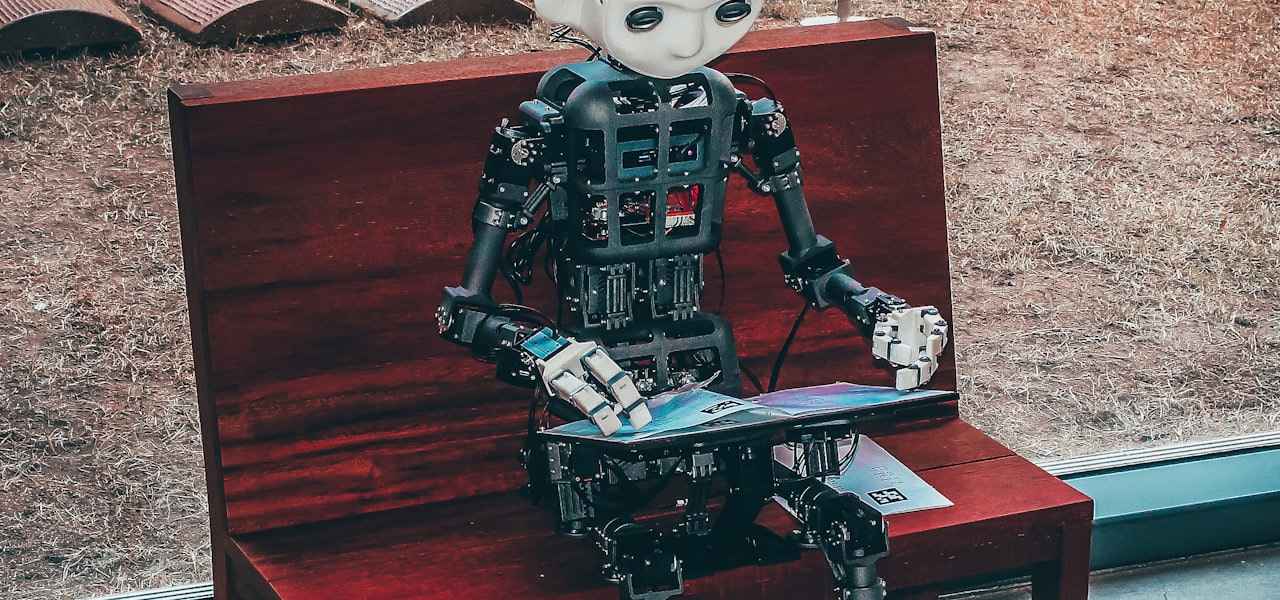
Ameca is a robotic humanoid created in 2021 by Engineered Arts, headquarters in Falmouth, Cornwall, United Kingdom. The project commenced in February 2021, and the first public demonstration was at the CES 2022 show in Las Vegas. Ameca's appearance features grey rubber skin on the face and hands, and is specifically designed to appear genderless. In 2024, an Ameca unit was installed in Edinburgh in the UK to reside at the National Robotarium. Ameca generation 3 has been released and showcased at ICRA 2025 along with Ami. == History == The first generation of Ameca was developed at Engineered Arts headquarters in Falmouth, Cornwall, United Kingdom. The project started in February 2021, with the first video revealed publicly on 1 December 2021. Ameca gained widespread attention on Twitter and TikTok ahead of its first public demonstration at the Consumer Electronics Show 2022, where it was covered by CNET and other news outlets. In 2022, Ameca presented an Alternative Christmas message by British TV Channel 4 for Christmas Day. Ameca was associated with the Museum of the Future's robotic family, where it could interact with visitors. In 2024, an Ameca unit was installed in Edinburgh in the UK to reside at the National Robotarium. In January 2026, Ameca served as an ambassador for the European Space Agency (ESA) at the 18th European Space Conference. == Features == It is designed as a platform for further developing robotics technologies involving human-robot interaction. utilizes embedded microphones, binocular eye mounted cameras, a chest camera and facial recognition software to interact with the public. Interactions can be governed by either OpenAI's GPT-3 or human telepresence. It also features articulated motorized arms, fingers, neck and facial features. Ameca's appearance features grey rubber skin on the face and hands, and is specifically designed to appear genderless. == Public appearances == Computer History Museum, California Heinz Nixdorf MuseumsForum, Paderborn, Germany Copernicus Science Center, Warsaw, Poland Museum of the Future, Dubai Consumer Electronics Show 2022 Deutsches Museum Nuremberg OMR Festival 2022 Hosted by Vodafone GITEX 2022 International Conference on Robotics and Automation 2023 International Telecommunication Union AI for Good Global Summit 2023 Sphere (Not Ameca, Custom humanoid named Aura built on Ameca technology)
Feature engineering
Feature engineering is a preprocessing step in supervised machine learning and statistical modeling which transforms raw data into a more effective set of inputs. Each input comprises several attributes, known as features. By providing models with relevant information, feature engineering significantly enhances their predictive accuracy and decision-making capability. Beyond machine learning, the principles of feature engineering are applied in various scientific fields, including physics. For example, physicists construct dimensionless numbers such as the Reynolds number in fluid dynamics, the Nusselt number in heat transfer, and the Archimedes number in sedimentation. They also develop first approximations of solutions, such as analytical solutions for the strength of materials in mechanics. == Clustering == One of the applications of feature engineering has been clustering of feature-objects or sample-objects in a dataset. Especially, feature engineering based on matrix decomposition has been extensively used for data clustering under non-negativity constraints on the feature coefficients. These include Non-Negative Matrix Factorization (NMF), Non-Negative Matrix-Tri Factorization (NMTF), Non-Negative Tensor Decomposition/Factorization (NTF/NTD), etc. The non-negativity constraints on coefficients of the feature vectors mined by the above-stated algorithms yields a part-based representation, and different factor matrices exhibit natural clustering properties. Several extensions of the above-stated feature engineering methods have been reported in literature, including orthogonality-constrained factorization for hard clustering, and manifold learning to overcome inherent issues with these algorithms. Other classes of feature engineering algorithms include leveraging a common hidden structure across multiple inter-related datasets to obtain a consensus (common) clustering scheme. An example is Multi-view Classification based on Consensus Matrix Decomposition (MCMD), which mines a common clustering scheme across multiple datasets. MCMD is designed to output two types of class labels (scale-variant and scale-invariant clustering), and: is computationally robust to missing information, can obtain shape- and scale-based outliers, and can handle high-dimensional data effectively. Coupled matrix and tensor decompositions are popular in multi-view feature engineering. == Predictive modelling == Feature engineering in machine learning and statistical modeling involves selecting, creating, transforming, and extracting data features. Key components include feature creation from existing data, transforming and imputing missing or invalid features, reducing data dimensionality through methods like Principal Components Analysis (PCA), Independent Component Analysis (ICA), and Linear Discriminant Analysis (LDA), and selecting the most relevant features for model training based on importance scores and correlation matrices. Features vary in significance. Even relatively insignificant features may contribute to a model. Feature selection can reduce the number of features to prevent a model from becoming too specific to the training data set (overfitting). Feature explosion occurs when the number of identified features is too large for effective model estimation or optimization. Common causes include: Feature templates - implementing feature templates instead of coding new features Feature combinations - combinations that cannot be represented by a linear system Feature explosion can be limited via techniques such as regularization, kernel methods, and feature selection. == Automation == Automation of feature engineering is a research topic that dates back to the 1990s. Machine learning software that incorporates automated feature engineering has been commercially available since 2016. Related academic literature can be roughly separated into two types: Multi-relational Decision Tree Learning (MRDTL) uses a supervised algorithm that is similar to a decision tree. Deep Feature Synthesis uses simpler methods. === Multi-relational Decision Tree Learning (MRDTL) === Multi-relational Decision Tree Learning (MRDTL) extends traditional decision tree methods to relational databases, handling complex data relationships across tables. It innovatively uses selection graphs as decision nodes, refined systematically until a specific termination criterion is reached. Most MRDTL studies base implementations on relational databases, which results in many redundant operations. These redundancies can be reduced by using techniques such as tuple id propagation. === Open-source implementations === There are a number of open-source libraries and tools that automate feature engineering on relational data and time series: featuretools is a Python library for transforming time series and relational data into feature matrices for machine learning. MCMD: An open-source feature engineering algorithm for joint clustering of multiple datasets. OneBM or One-Button Machine combines feature transformations and feature selection on relational data with feature selection techniques. OneBM helps data scientists reduce data exploration time allowing them to try and error many ideas in short time. On the other hand, it enables non-experts, who are not familiar with data science, to quickly extract value from their data with a little effort, time, and cost. getML community is an open source tool for automated feature engineering on time series and relational data. It is implemented in C/C++ with a Python interface. It has been shown to be at least 60 times faster than tsflex, tsfresh, tsfel, featuretools or kats. tsfresh is a Python library for feature extraction on time series data. It evaluates the quality of the features using hypothesis testing. tsflex is an open source Python library for extracting features from time series data. Despite being 100% written in Python, it has been shown to be faster and more memory efficient than tsfresh, seglearn or tsfel. seglearn is an extension for multivariate, sequential time series data to the scikit-learn Python library. tsfel is a Python package for feature extraction on time series data. kats is a Python toolkit for analyzing time series data. === Deep feature synthesis === The deep feature synthesis (DFS) algorithm beat 615 of 906 human teams in a competition. == Feature stores == The feature store is where the features are stored and organized for the explicit purpose of being used to either train models (by data scientists) or make predictions (by applications that have a trained model). It is a central location where you can either create or update groups of features created from multiple different data sources, or create and update new datasets from those feature groups for training models or for use in applications that do not want to compute the features but just retrieve them when it needs them to make predictions. A feature store includes the ability to store code used to generate features, apply the code to raw data, and serve those features to models upon request. Useful capabilities include feature versioning and policies governing the circumstances under which features can be used. Feature stores can be standalone software tools or built into machine learning platforms. == Alternatives == Feature engineering can be a time-consuming and error-prone process, as it requires domain expertise and often involves trial and error. Deep learning algorithms may be used to process a large raw dataset without having to resort to feature engineering. However, deep learning algorithms still require careful preprocessing and cleaning of the input data. In addition, choosing the right architecture, hyperparameters, and optimization algorithm for a deep neural network can be a challenging and iterative process.
Environmental impact of AI
The environmental impact of the design, training, deployment and use of artificial intelligence includes the greenhouse gas emissions from generating electricity for data centres and computing hardware, operational and upstream water use, and material impacts from hardware manufacturing, mining and electronic waste. Estimating AI's environmental effects can be difficult because results depend on how impacts are measured, including whether accounting includes only model computation or also data-centre overhead, idle capacity, hardware manufacture, and local electricity supply. As these issues have received greater attention, governments and regulators have increasingly considered data-centre reporting requirements, energy-efficiency standards, and broader transparency measures for AI-related resource use. == Carbon footprint and energy use == AI-related energy use arises at multiple stages, including model training, fine-tuning, inference, storage, networking, and supporting infrastructure such as cooling and power conversion. === Individual level === Published estimates of energy use per AI request vary widely across models, tasks and measurement methods. A benchmark study presented at the 2024 ACM Conference on Fairness, Accountability, and Transparency found substantial differences between task types, with lower energy use for some text tasks and much higher energy use for image generation in the study's test conditions. In that benchmark, simple classification tasks consumed about 0.002–0.007 Wh per prompt on average (about 9% of a smartphone charge for 1,000 prompts), while text generation and text summarisation each used about 0.05 Wh per prompt; image generation averaged 2.91 Wh per prompt, and the least efficient image model in the study used 11.49 Wh per image (roughly equivalent to half a smartphone charge). First-party measurements in production environments have also been published. A 2025 Google study on Gemini assistant serving reported median per-prompt energy, emissions, and water-use estimates under the authors' accounting framework, while noting that different system boundaries can produce substantially different results. The study reported a median text-prompt estimate of about 0.24 Wh, which is roughly as much energy as watching nine seconds of television. The study also stated that software and infrastructure improvements reduced energy use by a factor of 33 and carbon emissions by a factor of 44 for a typical prompt over one year within the authors' framework. Researchers at the University of Michigan measured the energy consumption of various Meta Llama 3.1 models released in 2024 and found that smaller language models (8 billion parameters) use about 114 joules (0.03167 Wh) per response, while larger models (405 billion parameters) require up to 6,700 joules (1.861 Wh) per response. This corresponds to the energy needed to run a microwave oven for roughly one-tenth of a second and eight seconds, respectively. Comparisons between AI systems and human labour for specific tasks have produced mixed results and remain sensitive to assumptions about output quality, workload and system boundaries. A 2024 study in Scientific Reports reported 130 to 2900 times lower estimated carbon emissions for selected AI systems than for human writers and illustrators under its assumptions. A later Scientific Reports paper reported a counterexample for programming tasks under its assumptions, finding 5 to 19 times higher estimated emissions for the evaluated AI system than for human programmers on the benchmark used in that study. === System level === ==== Energy use and efficiency ==== AI electricity intensity depends not only on model architecture but also on hardware and facility efficiency. Data-centre operators commonly report Power usage effectiveness (PUE), which measures the ratio of total facility energy to IT equipment energy; a lower PUE indicates less overhead energy for cooling and other supporting infrastructure. Operators may also publish metrics and case studies on hardware efficiency, cooling systems and power sourcing. In its 2024 environmental report, Google stated that its 2023 total greenhouse gas emissions increased 13% year over year, primarily because of increased data-centre energy consumption and supply-chain emissions, while also reporting lower PUE than industry averages for its own facilities. The International Energy Agency has also reported that data centres remain a relatively small share of global electricity use overall, but that their local effects can be much more pronounced because demand is geographically concentrated. ==== Carbon footprint ==== At system level, AI contributes to rising electricity demand in data centres and related infrastructure. The International Energy Agency estimated that data centres used about 415 TWh of electricity in 2024, or around 1.5% of global electricity consumption, and projected that data-centre electricity use could rise to about 945 TWh by 2030, with AI identified as the main driver of that growth alongside other digital services. The carbon footprint of AI systems depends strongly on electricity sources, hardware efficiency, utilisation rates, and what stages are included in the accounting. Training large models can require substantial electricity, while total lifecycle impacts also depend on deployment scale and the amount of inference performed after training. Early analyses of frontier-model development reported rapid historical growth in training compute for selected systems, although later trends have depended on changes in model design, hardware and efficiency gains. Accounting methods that include upstream or embodied impacts, such as hardware manufacture and facilities construction, can materially affect estimates of AI-related emissions. === Decisions and strategies by individual companies === Large technology companies have reported that the expansion of AI and cloud infrastructure affects their sustainability targets, electricity demand, and resource use. Google, for example, attributed part of its emissions growth in 2023 to increased data-centre energy consumption and supply-chain emissions in its 2024 environmental report. Cloud and AI companies have also announced measures intended to reduce environmental impacts, including investment in more efficient hardware, low-carbon electricity procurement, alternative cooling systems, and water stewardship programmes. The extent, comparability, and third-party verification of such disclosures vary between firms and jurisdictions. == Water usage == Data centres can use water directly for cooling and indirectly through the water used in electricity generation, depending on the local energy mix. Public reporting on data-centre water use has often been inconsistent, making comparisons between operators and regions difficult. To standardise operational reporting, The Green Grid proposed the metric water usage effectiveness (WUE), defined as annual site water use divided by IT equipment energy use. WUE does not by itself measure local water stress, source sustainability, or all upstream water impacts. Studies of AI water use also distinguish between water withdrawal and water consumption. Research on AI-specific water use has argued that the water footprint of AI systems can be difficult to observe and may vary substantially by location, cooling design, and electricity source. A 2025 Communications of the ACM article summarised methods for estimating AI water footprints and emphasised the distinction between water withdrawal and water consumption. Li and colleagues estimated that global AI water withdrawal could reach 4.2–6.6 billion cubic metres in 2027 under the scenarios examined in their article. Using GPT-3, released by OpenAI in 2020, as an example, they estimated that training the model in Microsoft's U.S. data centres could consume about 700,000 litres of onsite water and about 5.4 million litres in total when offsite electricity-related water use was included; they also estimated that 10–50 medium-length GPT-3 responses could consume about 500 mL of water, depending on when and where the model was deployed. Published prompt-level estimates have also varied by system and accounting framework: the 2025 Google study on Gemini assistant serving reported a median text-prompt estimate of about 0.26 mL under its framework. Location can materially affect the significance of data-centre water use. Research on U.S. data centres found that one-fifth of servers' direct water footprint came from moderately to highly water-stressed watersheds, while nearly half of servers were fully or partially powered by plants located in water-stressed regions. A 2025 Reuters report, citing data from Verisk Maplecroft and NatureFinance, said that an average mid-sized data centre uses about 1.4 million litres of water per day for cooling and that Phoenix would experience a 32% increase in annual water stress if currently pl
Autonomic networking
Autonomic networking follows the concept of Autonomic Computing, an initiative started by IBM in 2001. Its ultimate aim is to create self-managing networks to overcome the rapidly growing complexity of the Internet and other networks and to enable their further growth, far beyond the size of today. == Increasing size and complexity == The ever-growing management complexity of the Internet caused by its rapid growth is seen by some experts as a major problem that limits its usability in the future. What's more, increasingly popular smartphones, PDAs, networked audio and video equipment, and game consoles need to be interconnected. Pervasive Computing not only adds features, but also burdens existing networking infrastructure with more and more tasks that sooner or later will not be manageable by human intervention alone. Another important aspect is the price of manually controlling huge numbers of vitally important devices of current network infrastructures. == Autonomic nervous system == The autonomic nervous system (ANS) is the part of complex biological nervous systems that is not consciously controlled. It regulates bodily functions and the activity of specific organs. As proposed by IBM, future communication systems might be designed in a similar way to the ANS. == Components of autonomic networking == As autonomics conceptually derives from biological entities such as the human autonomic nervous system, each of the areas can be metaphorically related to functional and structural aspects of a living being. In the human body, the autonomic system facilitates and regulates a variety of functions including respiration, blood pressure and circulation, and emotive response. The autonomic nervous system is the interconnecting fabric that supports feedback loops between internal states and various sources by which internal and external conditions are monitored. === Autognostics === Autognostics includes a range of self-discovery, awareness, and analysis capabilities that provide the autonomic system with a view on high-level state. In metaphor, this represents the perceptual sub-systems that gather, analyze, and report on internal and external states and conditions – for example, this might be viewed as the eyes, visual cortex and perceptual organs of the system. Autognostics, or literally "self-knowledge", provides the autonomic system with a basis for response and validation. A rich autognostic capability may include many different "perceptual senses". For example, the human body gathers information via the usual five senses, the so-called sixth sense of proprioception (sense of body position and orientation), and through emotive states that represent the gross wellness of the body. As conditions and states change, they are detected by the sensory monitors and provide the basis for adaptation of related systems. Implicit in such a system are imbedded models of both internal and external environments such that relative value can be assigned to any perceived state - perceived physical threat (e.g. a snake) can result in rapid shallow breathing related to fight-flight response, a phylogenetically effective model of interaction with recognizable threats. In the case of autonomic networking, the state of the network may be defined by inputs from: individual network elements such as switches and network interfaces including specification and configuration historical records and current state traffic flows end-hosts application performance data logical diagrams and design specifications Most of these sources represent relatively raw and unprocessed views that have limited relevance. Post-processing and various forms of analysis must be applied to generate meaningful measurements and assessments against which current state can be derived. The autognostic system interoperates with: configuration management - to control network elements and interfaces policy management - to define performance objectives and constraints autodefense - to identify attacks and accommodate the impact of defensive responses === Configuration management === Configuration management is responsible for the interaction with network elements and interfaces. It includes an accounting capability with historical perspective that provides for the tracking of configurations over time, with respect to various circumstances. In the biological metaphor, these are the hands and, to some degree, the memory of the autonomic system. On a network, remediation and provisioning are applied via configuration setting of specific devices. Implementation affecting access and selective performance with respect to role and relationship are also applied. Almost all the "actions" that are currently taken by human engineers fall under this area. With only a few exceptions, interfaces are set by hand, or by extension of the hand, through automated scripts. Implicit in the configuration process is the maintenance of a dynamic population of devices under management, a historical record of changes and the directives which invoked change. Typical to many accounting functions, configuration management should be capable of operating on devices and then rolling back changes to recover previous configurations. Where change may lead to unrecoverable states, the sub-system should be able to qualify the consequences of changes prior to issuing them. As directives for change must originate from other sub-systems, the shared language for such directives must be abstracted from the details of the devices involved. The configuration management sub-system must be able to translate unambiguously between directives and hard actions or to be able to signal the need for further detail on a directive. An inferential capacity may be appropriate to support sufficient flexibility (i.e. configuration never takes place because there is no unique one-to-one mapping between directive and configuration settings). Where standards are not sufficient, a learning capacity may also be required to acquire new knowledge of devices and their configuration. Configuration management interoperates with all of the other sub-systems including: autognostics - receives direction for and validation of changes policy management - implements policy models through mapping to underlying resources security - applies access and authorization constraints for particular policy targets autodefense - receives direction for changes === Policy management === Policy management includes policy specification, deployment, reasoning over policies, updating and maintaining policies, and enforcement. Policy-based management is required for: constraining different kinds of behavior including security, privacy, resource access, and collaboration configuration management describing business processes and defining performance defining role and relationship, and establishing trust and reputation It provides the models of environment and behavior that represent effective interaction according to specific goals. In the human nervous system metaphor, these models are implicit in the evolutionary "design" of biological entities and specific to the goals of survival and procreation. Definition of what constitutes a policy is necessary to consider what is involved in managing it. A relatively flexible and abstract framework of values, relationships, roles, interactions, resources, and other components of the network environment is required. This sub-system extends far beyond the physical network to the applications in use and the processes and end-users that employ the network to achieve specific goals. It must express the relative values of various resources, outcomes, and processes and include a basis for assessing states and conditions. Unless embodied in some system outside the autonomic network or implicit to the specific policy implementation, the framework must also accommodate the definition of process, objectives and goals. Business process definitions and descriptions are then an integral part of the policy implementation. Further, as policy management represents the ultimate basis for the operation of the autonomic system, it must be able to report on its operation with respect to the details of its implementation. The policy management sub-system interoperates (at least) indirectly with all other sub-systems but primarily interacts with: autognostics - providing the definition of performance and accepting reports on conditions configuration management - providing constraints on device configuration security - providing definitions of roles, access and permissions === Autodefense === Autodefense represents a dynamic and adaptive mechanism that responds to malicious and intentional attacks on the network infrastructure, or use of the network infrastructure to attack IT resources. As defensive measures tend to impede the operation of IT, it is optimally capable of balancing performance objectives with typically over-riding threat management actions. In the
Intelligent database
Until the 1980s, databases were viewed as computer systems that stored record-oriented and business data such as manufacturing inventories, bank records, and sales transactions. A database system was not expected to merge numeric data with text, images, or multimedia information, nor was it expected to automatically notice patterns in the data it stored. In the late 1980s the concept of an intelligent database was put forward as a system that manages information (rather than data) in a way that appears natural to users and which goes beyond simple record keeping. The term was introduced in 1989 by the book Intelligent Databases by Kamran Parsaye, Mark Chignell, Setrag Khoshafian and Harry Wong. The concept postulated three levels of intelligence for such systems: high level tools, the user interface and the database engine. The high level tools manage data quality and automatically discover relevant patterns in the data with a process called data mining. This layer often relies on the use of artificial intelligence techniques. The user interface uses hypermedia in a form that uniformly manages text, images and numeric data. The intelligent database engine supports the other two layers, often merging relational database techniques with object orientation. In the twenty-first century, intelligent databases have now become widespread, e.g. hospital databases can now call up patient histories consisting of charts, text and x-ray images just with a few mouse clicks, and many corporate databases include decision support tools based on sales pattern analysis.