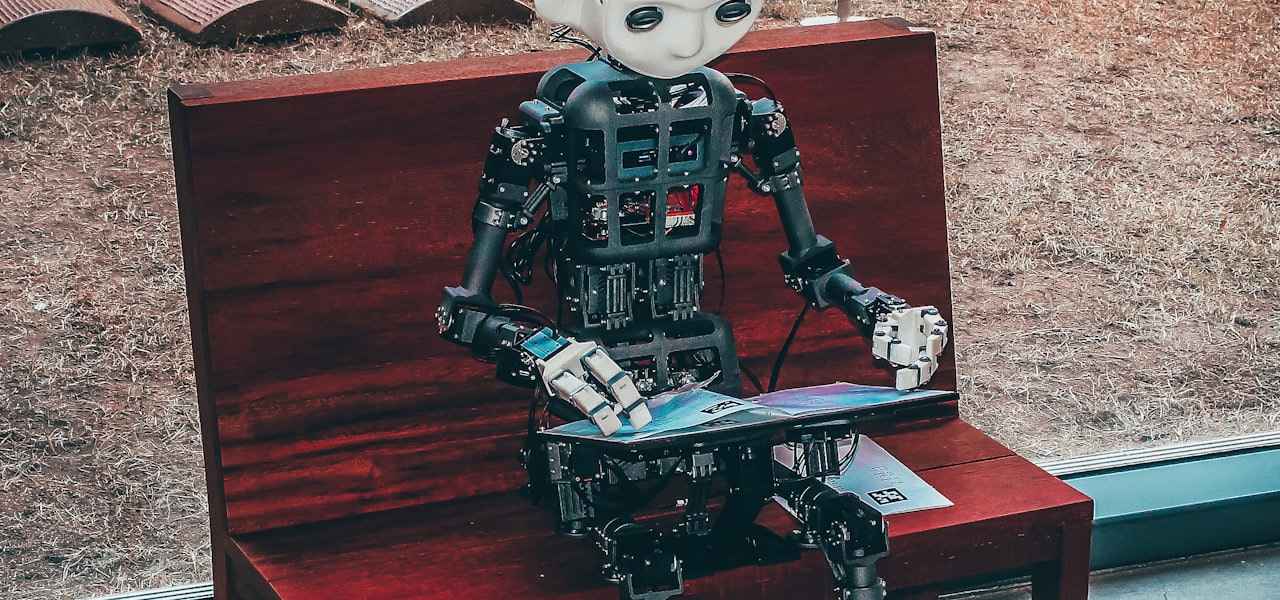
The following is a list of current and past, non-classified notable artificial intelligence projects. == Specialized projects == === Brain-inspired === Blue Brain Project, an attempt to create a synthetic brain by reverse-engineering the mammalian brain down to the molecular level. Google Brain, a deep learning project part of Google X attempting to have intelligence similar or equal to human-level. Human Brain Project, ten-year scientific research project, based on exascale supercomputers. === Cognitive architectures === 4CAPS, developed at Carnegie Mellon University under Marcel A. Just ACT-R, developed at Carnegie Mellon University under John R. Anderson. AIXI, Universal Artificial Intelligence developed by Marcus Hutter at IDSIA and ANU. CALO, a DARPA-funded, 25-institution effort to integrate many artificial intelligence approaches (natural language processing, speech recognition, machine vision, probabilistic logic, planning, reasoning, many forms of machine learning) into an AI assistant that learns to help manage your office environment. CHREST, developed under Fernand Gobet at Brunel University and Peter C. Lane at the University of Hertfordshire. CLARION, developed under Ron Sun at Rensselaer Polytechnic Institute and University of Missouri. CoJACK, an ACT-R inspired extension to the JACK multi-agent system that adds a cognitive architecture to the agents for eliciting more realistic (human-like) behaviors in virtual environments. Copycat, by Douglas Hofstadter and Melanie Mitchell at the Indiana University. DUAL, developed at the New Bulgarian University under Boicho Kokinov. FORR developed by Susan L. Epstein at The City University of New York. IDA and LIDA, implementing Global Workspace Theory, developed under Stan Franklin at the University of Memphis. OpenCog Prime, developed using the OpenCog Framework. Procedural Reasoning System (PRS), developed by Michael Georgeff and Amy L. Lansky at SRI International. Psi-Theory developed under Dietrich Dörner at the Otto-Friedrich University in Bamberg, Germany. Soar, developed under Allen Newell and John Laird at Carnegie Mellon University and the University of Michigan. Society of Mind and its successor The Emotion Machine proposed by Marvin Minsky. Subsumption architectures, developed e.g. by Rodney Brooks (though it could be argued whether they are cognitive). === Games === AlphaGo, software developed by Google that plays the Chinese board game Go. Chinook, a computer program that plays English draughts; the first to win the world champion title in the competition against humans. Deep Blue, a chess-playing computer developed by IBM which beat Garry Kasparov in 1997. Halite, an artificial intelligence programming competition created by Two Sigma in 2016. Libratus, a poker AI that beat world-class poker players in 2017, intended to be generalisable to other applications. The Matchbox Educable Noughts and Crosses Engine (sometimes called the Machine Educable Noughts and Crosses Engine or MENACE) was a mechanical computer made from 304 matchboxes designed and built by artificial intelligence researcher Donald Michie in 1961. Quick, Draw!, an online game developed by Google that challenges players to draw a picture of an object or idea and then uses a neural network to guess what the drawing is. The Samuel Checkers-playing Program (1959) was among the world's first successful self-learning programs, and as such a very early demonstration of the fundamental concept of artificial intelligence (AI). Stockfish AI, an open source chess engine currently ranked the highest in many computer chess rankings. TD-Gammon, a program that learned to play world-class backgammon partly by playing against itself (temporal difference learning with neural networks). === Internet activism === Serenata de Amor, project for the analysis of public expenditures and detect discrepancies. === Knowledge and reasoning === Alice (Microsoft), a project from Microsoft Research Lab aimed at improving decision-making in Economics Braina, an intelligent personal assistant application with a voice interface for Windows OS. Cyc, an attempt to assemble an ontology and database of everyday knowledge, enabling human-like reasoning. Eurisko, a language by Douglas Lenat for solving problems which consists of heuristics, including some for how to use and change its heuristics. Google Now, an intelligent personal assistant with a voice interface in Google's Android and Apple Inc.'s iOS, as well as Google Chrome web browser on personal computers. Holmes a new AI created by Wipro. Microsoft Cortana, an intelligent personal assistant with a voice interface in Microsoft's various Windows 10 editions. MindsDB, is an AI automation platform for building AI/ML powered features and applications. Mycin, an early medical expert system. Open Mind Common Sense, a project based at the MIT Media Lab to build a large common sense knowledge base from online contributions. Siri, an intelligent personal assistant and knowledge navigator with a voice-interface in Apple Inc.'s iOS and macOS. SNePS, simultaneously a logic-based, frame-based, and network-based knowledge representation, reasoning, and acting system. Viv (software), a new AI by the creators of Siri. Wolfram Alpha, an online service that answers queries by computing the answer from structured data. === Motion and manipulation === AIBO, the robot pet for the home, grew out of Sony's Computer Science Laboratory (CSL). Cog, a robot developed by MIT to study theories of cognitive science and artificial intelligence, now discontinued. === Music === Melomics, a bioinspired technology for music composition and synthesization of music, where computers develop their own style, rather than mimic musicians. === Natural language processing === AIML, an XML dialect for creating natural language software agents. Apache Lucene, a high-performance, full-featured text search engine library written entirely in Java. Apache OpenNLP, a machine learning based toolkit for the processing of natural language text. It supports the most common NLP tasks, such as tokenization, sentence segmentation, part-of-speech tagging, named entity extraction, chunking and parsing. Artificial Linguistic Internet Computer Entity (A.L.I.C.E.), a natural language processing chatterbot. ChatGPT, a chatbot built on top of OpenAI's GPT-3.5 and GPT-4 family of large language models. Claude, a family of large language models developed by Anthropic and launched in 2023. Claude LLMs achieved high coding scores in several recognized LLM benchmarks. Cleverbot, successor to Jabberwacky, now with 170m lines of conversation, Deep Context, fuzziness and parallel processing. Cleverbot learns from around 2 million user interactions per month. DeepSeek: Chinese chatbot funded by hedge fund High-Flyer. DBRX, 136 billion parameter open sourced large language model developed by Mosaic ML and Databricks. ELIZA, a famous 1966 computer program by Joseph Weizenbaum, which parodied person-centered therapy. FreeHAL, a self-learning conversation simulator (chatterbot) which uses semantic nets to organize its knowledge to imitate a very close human behavior within conversations. Gemini, a family of multimodal large language model developed by Google's DeepMind. Drives the Gemini chatbot, formerly known as Bard. GigaChat, a chatbot by Russian Sberbank. GPT-3, a 2020 language model developed by OpenAI that can produce text difficult to distinguish from that written by a human. Jabberwacky, a chatbot by Rollo Carpenter, aiming to simulate natural human chat. LaMDA, a family of conversational neural language models developed by Google. LLaMA, a 2023 language model family developed by Meta that includes 7, 13, 33 and 65 billion parameter models.[1] Mycroft, a free and open-source intelligent personal assistant that uses a natural language user interface. PARRY, another early chatterbot, written in 1972 by Kenneth Colby, attempting to simulate a paranoid schizophrenic. SHRDLU, an early natural language processing computer program developed by Terry Winograd at MIT from 1968 to 1970. SYSTRAN, a machine translation technology by the company of the same name, used by Yahoo!, AltaVista and Google, among others. === Speech recognition === CMU Sphinx, a group of speech recognition systems developed at Carnegie Mellon University. DeepSpeech, an open-source Speech-To-Text engine based on Baidu's deep speech research paper. Whisper, an open-source speech recognition system developed at OpenAI. === Speech synthesis === 15.ai, a real-time artificial intelligence text-to-speech tool developed by an anonymous researcher from MIT. Amazon Polly, a speech synthesis software by Amazon. Festival Speech Synthesis System, a general multi-lingual speech synthesis system developed at the Centre for Speech Technology Research (CSTR) at the University of Edinburgh. WaveNet, a deep neural network for generating raw audio. === Video === CapCut is a video editor tool, developed
Object model
In computing, object model has two related but distinct meanings: The properties of objects in general in a specific computer programming language, technology, notation or methodology that uses them. Examples are the object models of Java, the Component Object Model (COM), or Object-Modeling Technique (OMT). Such object models are usually defined using concepts such as class, generic function, message, inheritance, polymorphism, and encapsulation. There is an extensive literature on formalized object models as a subset of the formal semantics of programming languages. A collection of objects or classes through which a program can examine and manipulate some specific parts of its world. In other words, the object-oriented interface to some service or system. Such an interface is said to be the object model of the represented service or system. For example, the Document Object Model (DOM) is a collection of objects that represent a page in a web browser, used by script programs to examine and dynamically change the page. There is a Microsoft Excel object model [1] for controlling Microsoft Excel from another program, and the ASCOM Telescope Driver is an object model for controlling an astronomical telescope. == Features == An object model consists of the following important features: === Object reference === Objects can be accessed via object references. To invoke a method in an object, the object reference and method name are given, together with any arguments. === Interfaces === An interface provides a definition of the signature of a set of methods without specifying their implementation. An object will provide a particular interface if its class contains code that implement the method of that interface. An interface also defines types that can be used to declare the type of variables or parameters and return values of methods. === Actions === An action in object-oriented programming (OOP) is initiated by an object invoking a method in another object. An invocation can include additional information needed to carry out the method. The receiver executes the appropriate method and then returns control to the invoking object, sometimes supplying a result. === Exceptions === Programs can encounter various errors and unexpected conditions of varying seriousness. During the execution of the method many different problems may be discovered. Exceptions provide a clean way to deal with error conditions without complicating the code. A block of code may be defined to throw an exception whenever particular unexpected conditions or errors arise. This means that control passes to another block of code that catches the exception.
YNAB
You Need a Budget (YNAB) (pronounced ) is an online personal budgeting program based on the envelope system developed by a privately owned American company of the same name. It is available via any web browser or a mobile app. == History == The program was initially developed as standalone software in 2004 by Jesse Mecham, while he was in college pursuing his master's degree in accounting, after he and his wife faced financial difficulty and decided to improve their budgeting. It evolved from a spreadsheet that he created for the budgeting process. The acronym stands for "you need a budget." In 2015 they changed their licensing model to software as a service. In 2020, YNAB had 115 employees, all working remotely. == Overview == The service encourages users to follow four principles or "rules": Give every dollar a job: Each dollar in a budget is allocated to a specific purpose. This concept is also called zero-based budgeting. Embrace true expenses: All expenses are planned for, so that there are no surprises. Roll with the punches: Being flexible when there is overspending. Age your money: Keeping money in your budget without immediately spending it. Users can either import transactions automatically from their financial institutions or input them manually. The software also displays financial reports to keep users informed about their finances at a glance. == Awards and recognition == YNAB has been named one of the best budgeting apps by U.S. News & World Report, Kiplinger's Personal Finance, CNN, HuffPost, CNBC, and hundreds of other financial reporting outlets. The Wall Street Journal – Best budgeting app for hands-on budgeters. Forbes – Best Budgeting Apps Money – Best budgeting app for college students. Lifehacker – Most popular personal finance software. Wirecutter – "Great pick for hard-core budgeters". Investopedia – Best overall budgeting app.
SAP NetWeaver Visual Composer
SAP NetWeaver Visual Composer is SAP’s web-based software modelling tool. It enables business process specialists and developers to create business application components, without coding. Visual Composer produces applications in a declarative form, enabling code-free execution mode for multiple runtime environments. It provides application lifecycle support by maintaining the connection between an application and its model throughout its lifecycle. Visual Composer is designed with an open architecture, which enables developers to extend its design-time environment and modelling language, as well as to integrate external data services. The tool aims to increase productivity by reducing development effort time, and narrowing the gap between application definition and implementation. Starting with a blank canvas, the Visual Composer user, typically a business process specialist, draws the application in Visual Composer Storyboard (workspace), without writing code, to prototype, design and produce applications. A typical workflow for creating, deploying and running an application using Visual Composer is: Create a model Discover data services and add them to the model Select necessary UI elements and add them to the model Connect model elements to define the model logic and data flow Edit the layout Arranging the UI elements and the controls of the application on forms and tables. Deploy the model This step includes compilation, validation and deployment to a selected environment. Run the application The application can run using different runtime environment (such as Adobe Flex and HTML). In 2014 a runtime environment was introduced that is utilizing HTML5 capabilities of SAPUI5.
24SevenOffice
24SevenOffice is a Norwegian software company headquartered in Oslo, Norway, with offices in Stockholm, Sweden and London, United Kingdom. Founded in 1997, the company specializes in web-based (SaaS) ERP and CRM systems. == Company history == 24SevenOffice was founded in 1997 in Porsgrunn, Norway, as IKT Interactive AS and marketed as kontorplassen.no. The name "24SevenOffice" was introduced for the company's London branch when the company entered the British market in 2003. The company changed its name to 24SevenOffice in February 2005. Originally based in Skien, the company later moved to Oslo Innovation Center, then to Tjuvholmen in the waterfront Fjord City of Oslo, and now the headquarters are located in Inkognitogaten 33, Solli plass, Oslo. The idea for the company's product was developed in 1996, and 24SevenOffice was an early innovator in the Scandinavian market in web-based enterprise resource planning solutions (ERP). A British office was established at Surrey Business Park in May 2003, with the company launching its web-based (SaaS) utility computing system to the UK SME market in 2004. An office in Chennai, India, was established in 2005, and 24SevenOffice entered the Swedish market when they acquired the leading competitor and ERP-provider Start & Run in a cash deal. In August 2005, the company had an initial public offering that raised NOK 15 million, and the company entered The Norwegian Over the Counter Market list as of 5 October 2005 (the ticker was 24SO), reaching a market value of NOK 175 million, with 5000 customers in Norway. In 2006, the company signed a deal to sponsor rally driver Petter Solberg, at the time the largest private sponsorship in Norwegian sport. Instead of receiving NOK 5 million in cash, Solberg received a 2.9 per cent ownership in the company. The company entered the German-speaking market in April 2006 when an office in Frankfurt am Main was opened. In late August/early September, they established an office with ten sales agents plus a general manager in Stockholm for the Swedish market. 24SevenOffice initiated strategic cooperation with Active 24 in early 2006 to develop a common platform. During the summer, Active 24 was bought by 24SevenOffice's ERP/CRM competitor Mamut (company), and 24SevenOffice terminated the contract with Active 24 in October demanding NOK 200 million in compensation for lost revenue. After a breakdown of settlement negotiations in the Forliksråd in January 2007, 24SevenOffice filed a case against Active 24 for breach of agreement in the Oslo District Court in March. 24SevenOffice lost on all counts in the District Court in December 2007. In January 2008, 24SevenOffice appealed the case to the Borgarting Court of Appeal, reducing the cause of action from NOK 250 to 30 million. 24SevenOffice lost on all counts in the Court of Appeal in December 2008, and was ordered to cover the costs incurred by Active 24 in connection with the dispute totaling NOK 6.91 million. 24SevenOffice appealed the case to the Supreme Court of Norway, but the Supreme Court Appeals Committee in March 2008 unanimously rejected the appeal from 24SevenOffice over the Borgarting Appeal Court's unanimous judgment of December 2008. On a counterclaim from Active 24 and Mamut against 24SevenOffice, the Oslo District Court in May 2010 found, that 24SevenOffice should pay Active 24 NOK 12 million in compensation for wrongfully having terminated the agreement, and a further NOK 360.000 of the opponent's legal costs. 24SevenOffice disagreed with the court ruling, and appealed once again. The Borgarting Court of Appeal in November 2011, ruled to reduce the amount of damages to NOK 4.4 million plus NOK 900.000 in penal interest. With several scrip issues, 24SevenOffice raised 25 million NOK (about $4 million at the time) between October 2005 and July 2006. They entered into a strategic partnership with Bluegarden, who for 30 years had delivered digital services for payroll, human resource planning, recruitment and training, in March 2006, and they made a large-scale agreement in April 2006, with US telecommunications software company Webex, a competitor to Norwegian Tandberg videoconferencing equipment manufacturer. In September 2006, 24SevenOffice signed an agreement with Fokus Bank to provide their customers with extended functionality in Internet banking. 24SevenOffice had by 2007 reportedly 9000 customers, joined the OpenAjax Alliance, and entered into a strategic partnership with Dun & Bradstreet in May 2007, but despite getting listed on Oslo Axess on 22 June (ticker: TFSO), reaching a market capitalization of NOK 120 million, the company was still losing money. The company ended 2007 with a revenue of NOK 21.7 million. In 2008, 24SevenOffice bought 50% of the stocks in telecommunication company Oyatel, partnered with Nets Group to facilitate invoicing for businesses, and telecommunications company Telipol chose 24SevenOffice's second-generation Internet platform for its 8,000 users. They announced an increase in revenues in Q2 to 11.1 million, up from 4.7 million in the same period the year before. 24SevenOffice had a turnover of NOK 37 million in the first half of 2009, a doubling compared to the same period the previous year, and presented its first positive EBITDA in Q2. The Norwegian Association of Auditors signed an agreement with 24SevenOffice in 2011, whereby they only recommend 24SevenOffice as a system for their members to use. On 27 June 2013, the shareholders of 24SevenOffice took off from the stock exchange and privatized the company. In recent years, the company has invested heavily in finance and accounting – and got leading auditing companies such as PwC and KPMG on the customer list. == Products == 24SevenOffice is a web-based (SaaS) ERP system. It includes modules for CRM, accounting, invoicing, e-mail, file/document management and project management. == Awards == 24SevenOffice won the Seal of Excellence in Multimedia Award at the 2004 CeBIT, became Norwegian Gazelle Company of the year 2004, chosen by Dagens Næringsliv and Dun & Bradstreet, won Product of the Year in the Norwegian finance magazine Kapital, and the IKT Grenland Innovation Award in 2008.
Outline of brain mapping
The following outline is provided as an overview of and topical guide to brain mapping: Brain mapping – set of neuroscience techniques predicated on the mapping of (biological) quantities or properties onto spatial representations of the (human or non-human) brain resulting in maps. Brain mapping is further defined as the study of the anatomy and function of the brain and spinal cord through the use of imaging (including intra-operative, microscopic, endoscopic and multi-modality imaging), immunohistochemistry, molecular and optogenetics, stem cell and cellular biology, engineering (material, electrical and biomedical), neurophysiology and nanotechnology. == Broad scope == History of neuroscience History of neurology Brain mapping Human brain Neuroscience Nervous system. === The neuron doctrine === Neuron doctrine – A set of carefully constructed elementary set of observations regarding neurons. For more granularity, more current, and more advanced topics, see the cellular level section Asserts that neurons fall under the broader cell theory, which postulates: All living organisms are composed of one or more cells. The cell is the basic unit of structure, function, and organization in all organisms. All cells come from preexisting, living cells. The Neuron doctrine postulates several elementary aspects of neurons: The brain is made up of individual cells (neurons) that contain specialized features such as dendrites, a cell body, and an axon. Neurons are cells differentiable from other tissues in the body. Neurons differ in size, shape, and structure according to their location or functional specialization. Every neuron has a nucleus, which is the trophic center of the cell (The part which must have access to nutrition). If the cell is divided, only the portion containing the nucleus will survive. Nerve fibers are the result of cell processes and the outgrowths of nerve cells. (Several axons are bound together to form one nerve fibril. See also: Neurofilament. Several nerve fibrils then form one large nerve fiber. Myelin, an electrical insulator, forms around selected axons. Neurons are generated by cell division. Neurons are connected by sites of contact and not via cytoplasmic continuity. (A cell membrane isolates the inside of the cell from its environment. Neurons do not communicate via direct cytoplasm to cytoplasm contact.) Law of dynamic polarization. Although the axon can conduct in both directions, in tissue there is a preferred direction of transmission from cell to cell. Elements added later to the initial Neuron doctrine A barrier to transmission exists at the site of contact between two neurons that may permit transmission. (Synapse) Unity of transmission. If a contact is made between two cells, then that contact can be either excitatory or inhibitory, but will always be of the same type. Dale's law, each nerve terminal releases a single type of neurotransmitter. Some of the basic postulates in the Neuron doctrine have been subsequently questioned, refuted, or updated. See the cellular level section topics for additional information. === Map, atlas, and database projects === Brain Activity Map Project – 2013 NIH $3 billion project to map every neuron in the human brain in ten years, based upon the Human Genome Project. NIH Brain Research through Advancing Innovative Neurotechnologies (BRAIN) Initiative [1] Community outreach site for above where the public may comment [2] Human Brain Project (EU) – 1 billion euro, 10-year project to simulate the human brain with supercomputers. BigBrain A high-resolution 3D atlas of the human brain created as part of the HBP. Human Connectome Project – 2009 NIH $30 million project to build a network map of the human brain, including structural (anatomical) and functional elements. Emphasis included research into dyslexia, autism, Alzheimer's disease, and schizophrenia. See also Connectome a, comprehensive map of neural connections in the brain. Allen Brain Atlas – 2003 $100 million project funded by Paul Allen (Microsoft) BrainMaps – National Institute of Health (NIH) database including 60 terabytes of image scans of primate and non-primates, integrated with information covering structure and function. NeuroNames – Defines the brain in terms of about 550 primary structures (about 850 unique structures) to which all other structures, names, and synonyms are related. About 15,000 neuroanatomical terms are cross indexed, including many synonyms in seven languages. Coverage includes the brain and spinal cord of the four species most frequently studied by neuroscientists: human, macaque (monkey), rat and mouse. The controlled, standardized vocabulary for each structure is located in an unambiguous, strict physical hierarchy, and these terms are selected based on ease of pronunciation, mnemonic value, and frequency of use in recent neuroscientific publications. Relation of each structure to its superstructures and substructures is included. The controlled vocabulary is suitable for uniquely indexing neuroanatomical information in digital databases. Decade of the Brain 1990–1999 promotion by NIH and the Library of Congress "to enhance public awareness of the benefits to be derived from brain research". Communications targeted Members of Congress, staffs, and the general public to promote funding. Talairach Atlas see Jean Talairach Harvard Whole Brain Atlas see Human brain MNI Template see Medical image computing Blue Brain Project and Artificial brain International Consortium for Brain Mapping see Brain Mapping List of neuroscience databases NIH Toolbox National Institute of Health (USA) toolbox for the assessment of neurological and behavioral function Organization for Human Brain Mapping The Organization for Human Brain Mapping (OHBM) is an international society dedicated to using neuroimaging to discover the organization of the human brain. == Imaging and recording systems == This section covers imaging and recording systems. The general section covers history, neuroimaging, and techniques for mapping specific neural connections. The specific systems section covers the various specific technologies, including experimental and widely deployed imaging and recording systems. === General === Most imaging work to date on individual neurons has been conducted outside the brain, typically on large neurons, and has been most frequently destructive. New techniques are however rapidly emerging. Search on "Single neuron imaging" and see related topics: Biological neuron model, Single-unit recording, Neural oscillation, Computational neuroscience. dMRI (above) is also promising in non-destructive imaging of single neurons inside the brain. History of neuroimaging (redirects from Brain scanner) Neuroimaging (redirects from Brain function map) Connectomics – mapping technique showing neural connections in a nervous system. === Specific systems === Cortical stimulation mapping Diffusion MRI (dMRI) – includes diffusion tensor imaging (DTI) and diffusion functional MRI (DfMRI). dMRI is a recent breakthrough in brain mapping allowing the visualization of cross connections between different anatomical parts of the brain. It allows noninvasive imaging of white matter fiber structure and in addition to mapping can be useful in clinical observations of abnormalities, including damage from stroke. Electroencephalography (EEG) – uses electrodes on the scalp and other techniques to detect the electrical flow of currents. Electrocorticography – intracranial EEG, the practice of using electrodes placed directly on the exposed surface of the brain to record electrical activity from the cerebral cortex. Electrophysiological techniques for clinical diagnosis Functional magnetic resonance imaging (fMRI) Medical image computing (brain research of leads medical and surgical uses of mapping technology) Neurostimulation (in research stimulation is frequently used in conjunction with imaging) Positron emission tomography (PET) – a nuclear medical imaging technique that produces a three-dimensional image or picture of functional processes in the body. The system detects pairs of gamma rays emitted indirectly by a positron-emitting radionuclide (tracer), which is introduced into the body on a biologically active molecule. Three-dimensional images of tracer concentration within the body are then constructed by computer analysis. In modern scanners, three dimensional imaging is often accomplished with the aid of a CT X-ray scan performed on the patient during the same session, in the same machine. === Imaging and recording componentry === ==== Electrochemical ==== Haemodynamic response – the rapid delivery of blood to active neuronal tissues. Blood Oxygenation Level Dependent signal (BOLD), corresponds to the concentration of deoxyhemoglobin. The BOLD effect is based on the fact that when neuronal activity is increased in one part of the brain, there is also an increased amount of cerebral blood flow to that area. Functional m
Cryptee
Cryptee is a privacy focused client-side encrypted and cross-platform productivity suite and data storage service. == History == Cryptee was founded in 2017, by John Ozbay, a cybersecurity researcher, commenter, and activist, to exclusively focus on providing a secure document editing service similar to Google Docs and Photos for everyone, with a particular focus on victims and survivors of domestic abuse, journalists and reporters. == Software == Users can write personal documents, notes, journals, store images, videos, and various kinds of other files. The source code of Cryptee is open source and publicly available to allow anyone to audit the service with ease, and help identify errors or potential vulnerabilities in a public and transparent manner. Cryptee has a few key features that differentiate it from other services in the industry, such as its Ghost Folders and Ghost Albums features, built specifically with victims and survivors of domestic abuse, journalists and reporters in mind. Cryptee allows users to hide (ghost) folders for plausible deniability also as known as deniable encryption in the field of cryptography and steganography, and ensure privacy even under coercion. === Features === Cryptee Docs' features include: To-do lists, Markdown support, KaTeX math and file attachments. cross-platform accessible, as it is a progressive web app. Bulk transfer from other note taking apps such as Evernote. Encrypted PDF and print-accurate (A4 and U.S. Letter paper-sized) text editing. Ability to edit docx files Cryptee Photos' features include: Ability to create slideshows. Ability to store original quality of photos. Ability to tag photos for organization. === Commercial strategy === The company's commercial strategy is focused on offering to its users an open source and transparent Photo Storage, Document Editor and Cloud Storage services without trackers or advertisements as it seeks to compete with Google Docs, Google Photos and similar services through its offerings. === Privacy === Cryptee utilizes zero-access storage to safe-keep all users' sensitive digital belongings. == Advocacy == === Lockdown mode === In July 2022, to fortify iPhones against the Pegasus Spyware, Apple announced a new, upcoming Lockdown Mode feature in iOS 16, welcomed by many experts. In the following weeks after Apple's announcement, in August 2022, the Founder and CEO of Cryptee, and privacy activist John Ozbay published their research detailing shortcoming of Apple's Lockdown Mode. They demonstrated that enabling Lockdown Mode makes it possible for all websites and online ads to be able to detect if users have Lockdown Mode enabled or not. This was due to the fact that disabling web fonts (an attack surface) was detectable by websites. === Confrontations against Apple === ==== On PWAs ==== In February 2024, Apple announced plans to kill progressive web apps on iOS devices in the EU, claiming it was to comply with the Digital Markets Act (DMA). The announcement was criticized as anti-competitive by many in the tech industry, including by Tim Sweeney, the CEO of Epic Games. In response, Cryptee started working together with Open Web Advocacy (OWA), an international not-for-profit digital rights group to advocate for the future of the open web, promote web browser choice on mobile operating systems through challenging Apple's anti-competitive third party browser engine ban, and to champion the use and equality of progressive web apps over native apps, by reaching out to the European Union's Digital Markets Act (DMA) team. To better understand the consequences of Apple's decision to kill web apps, the EU announced that they "seek to investigate Apple over cutting off web apps", and that they sent "requests for information to Apple and to app developers, who can provide useful information for our assessment". Apart from sending a response to the EU, Cryptee, along with the OWA, launched an open letter to Tim Cook, which in 48 hours, got thousands of signatories including European Parliament Members Karen Melchior and Patrick Breyer; and thousands of other developers and organizations from over 100 countries. Consequently, 24 hours later, Apple backed off, and reversed course on its plan to cut off progressive web apps in the EU. ==== Ozbay's representations ==== Following the events, eventually on March 18, 2024, Founder and CEO of Cryptee John Ozbay represented the Open Web Advocacy group in European Union's Digital Markets Act (DMA) hearing for Apple. At the hearing, OWA confronted Apple, accused Apple of "maliciously intending to undermine user choice", and stated that there was no defense for Apple's behavior. In response, according to the tech news outlet Ars Technica, Apple's spokesperson "seemed to dodge Ozbay's question". ==== Cooperation with the EU ==== Within a week of the hearing, the European Union announced a DMA non-compliance investigation against Apple and United States' Department of Justice filed an antitrust lawsuit against Apple. A few months later, on June 27, 2024, Cryptee, in cooperation with EDRi — an international advocacy group, along with Article 19 — a British international human rights organization, Privacy International, F-Droid, Free Software Foundation Europe, Guardian Project and others have submitted a comprehensive analysis to the European Commission about how Apple's plans to comply with the Digital Markets Act are insufficient. == Reviews == In a 2018 article, Wall Street Journal's MarketWatch reviewed Cryptee, articulating the fact that Cryptee offers zero-access storage for photos, files, documents and notes, and pointed out that: "Being based in Estonia puts Cryptee outside the “14 eyes jurisdiction,” an international surveillance alliance of European Union and North American countries, making it less likely it will be targeted with demands for data". In addition, the review highlighted Cryptee's Ghost Folders feature which ensures privacy even under coercion. In a 2019 article, Reclaim The Net named Cryptee as one of the "5 great privacy-focused Evernote alternatives to keep your notes safe", underlining that: "When it comes to security, this app is state of the art." and that "When making this app, the developers thought about every aspect of security and have taken every precaution to make it as secure as possible.". The review further underscored Cryptee's open-source nature, its strong encryption, and easy migration features. In a 2021 article, The Verge reviewed Cryptee, pointing out that Cryptee, based out of Europe, is one of the main photo storage service alternatives to Google Photos, and that it's their recommendation for users who are "concerned about privacy and like the idea of encryption" as Cryptee "offers to keep all your photos encrypted using AES-256". In a 2024 article, Beebom, enlisted Cryptee as one of the "7 best iCloud Photos Alternatives for iPhone and iPad", complimenting Cryptee's simplicity, its use of encryption to safeguard users' photos against hacking by not storing any unencrypted data. The article also provided further attention to Cryptee's additional features such as such as Ghost Albums, slideshows, easy-to-use drag and drop uploads, tagging and users' ability to store original-quality photos on Cryptee, concluding that Cryptee is "a safe bet if you are on the lookout for a privacy-centric iCloud Photos alternative".